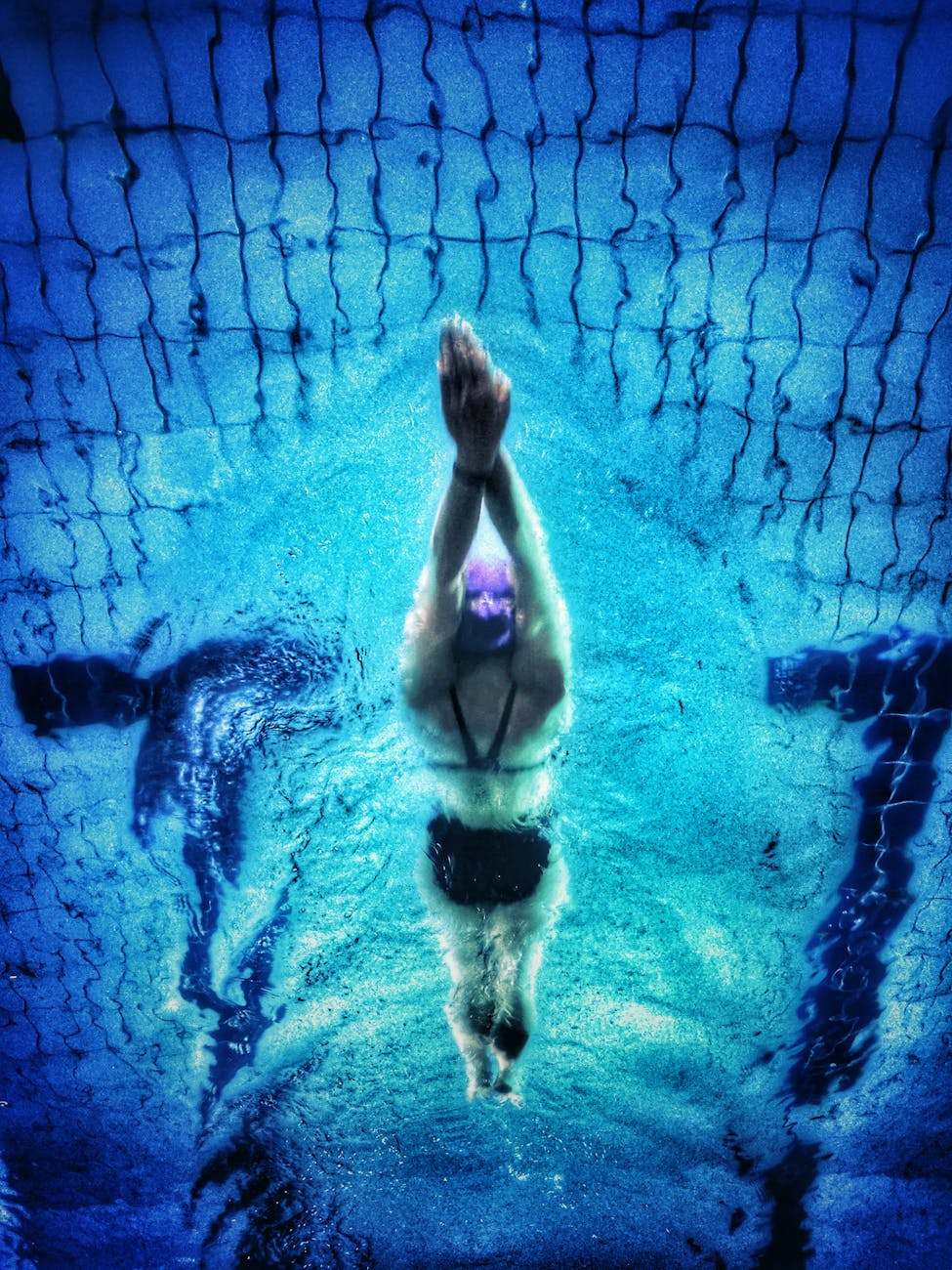
Swimming has the potential to be an illustration of the power, strength and beauty of the human form. Propelling oneself through crystal clear water, whether in the open ocean, or just a local pool, can serve as the ultimate full-body workout, whilst simultaneously calming your mind.
But why does it leave you feeling so utterly ravenous?
The science behind the your post-pool hunger pangs
I have had an affinity with the water for as long as I can remember. Confident in a 25m pool before I could toddle in a straight line, then a competitive swimmer for most of my teenage years, I am no stranger to spending hours paddling like my life depends on it. Nevertheless, there is one element of the sport that still, on occasion, catches me by surprise:
My inability to make it home from the leisure centre without a snack.
Whether an elite level athlete or simply a fan of a few laps, there may be some genuine reasons behind your rumbling belly…
1. Its cold
With pools often around 10 degrees celsius below our usual body temperature, the body has to work harder to regulate its temperature, resulting in greater calorie usage. Studies into the effect of water temperature on post-sport energy intake found that athletes exposed to water at 20 degrees Celsius consumed roughly 44% more calories on average, than those submerged in warmer water. (1) Hence why you feel hungrier after a water-based workout, than a hard session in a sweaty gym, particularly in a very chilly pool.
This is exacerbated by the fact that heat loss in water is greater than in air – for physics-based reasons I will not pretend to understand. The consequence of this is, in order to maintain a comfortable temperature, the body must burn additional energy to stay warm.
Additionally, when engaging in a hard workout, the body normally directs blood away from the stomach, to the skin in order to release excess body temperature. The cold water, however, means digestive processes continue as usual, and hunger signals continue to function. Conversely, high intensity land-based workouts have a tendency to reduce appetite and mask hunger cues.
The net effect of all this, is that regardless of the intensity of your swim, your body requires additional fuel.
2. Swimming is physically taxing
Widely regarded as one of the most effective full-body workouts on the market, its no secret that swimming places intense (yet low impact) strain on the body. When gliding through the pool, we are forced to battle with around 800 times more resistance than when moving through air. Consequently, all of our muscle groups are required to work, in addition to our cardiovascular system.
This means swimming is a metabolic monster when it comes to calorie burn – our muscles not only demand energy to perform the strokes, but also in order to repair the microtears that occur as a consequence of training. You may have heard that lifting weights can increase the body’s metabolic rate for up to 36 hours after a session; the same is true for swimming, as the muscles need more fuel even at rest. Additionally, the higher your heart rate, the more calories your cardiovascular system requires.
Swimming puts Instagram’s ‘hybrid’ athletes to shame – it truly is the best of both worlds.
For those with a more advanced swim training regime, technical movements like dives, starts, and turns may feature in your session. These highly explosive movements also require significant amounts of energy, and the engagement of fast-switch muscle fibres. This serves to only further increase the caloric requirement of swimming, and the subsequent increase in appetite.
3. You’re a newbie
If you’ve previously delved into any new type of exercise, whether that be running, weight training, or even yoga, you may have noticed an increase in appetite throughout the first few weeks of your new routine. This is because, as the body gets used to the new stimulus, it requires more energy to fuel the activity – for both your brain and physical systems. Over time, your muscular and cardiovascular systems will become conditioned to the new exercise, hence it starts to feel easier. As you become more efficient, the hunger may begin to abate.
Swimming is highly technical. Your first few sessions in the pool may feel, quite frankly, exhausting, due to the inefficiency of your stroke. After some lessons and a good deal of practice, things will start to improve. Soon, you will be gliding, rather than thrashing. As swimming becomes easier, your heart rate will not be as high, making it slightly less strenuous.
Despite this, even if your swim feels ‘easy’, spending any prolonged period of time in an aerobic heart rate zone will inevitable spike your hunger, sometimes more so than a more brutal workout, thanks to a lesser impact on ghrelin production. (A factor I explain in more detail below)
4. You’re hitting high training volumes
If you fall into the category of being a club swimmer, or are committed to excelling in the pool, the likelihood is that you’re spending more hours training than athletes of similar abilities, in other sports. Newsflash; swimming occurs in water, and the majority of day to day activities don’t. Therefore, the only way of significantly improving your technique, competence and pace in the water, is getting in the water. As a result of this, swimmers’ training weeks are frequently more time-intensive than that of a javelin thrower would be, for example.
With athletes as young as their early teens grinding through 5 hour training days, and 20 hour weeks, its no surprise that their bodies are demanding significant nourishment. Even if your training on one particular day of the week is nothing too dramatic, having a high weekly volume may mean you’re hungry regardless, as your body seeks the nutrients it needs to repair muscles, refill glycogen stores, and train again tomorrow.
5. You’re pushing yourself
It will come as no surprise to anyone that a hard session can instigate more snack cravings than a gentle one. Consequently, a swim session packed with sprints, long stints of unbroken lengths, and short rest periods are going to make you hungrier. This effect will be amplified if you usually opt for a gently resistance training session, for example.
This said, intense running sessions (such as intervals) often numb hunger cues, and can even make the athlete feel sick. The culprits for this are a suppression of ghrelin – the hunger hormone – caused by training, the fact that blood flow has been diverted to your working muscles, and simply that your stomach has been bouncing around for the duration of your session.
Athlete’s appetites
Heard the tales of Phelp’s 10000 calorie training diet? The likelihood is that they’re true.
The majority of professional sportspeople will be consuming more than the standard person, but swimmers are amongst the hungriest athletes around. For the reasons listed above, swimming is one of the most energy-intensive movements going. Not only this, but those at the highest level of the sport will often be completing more hours of training in a week than many mere mortals would execute in a month.
For example, Britain’s breaststroke superstar, Adam Peaty, generally packs 20 hours in the pool, and 10 hours in the gym into a normal week, hence his somewhat impressive 6000-8000 calorie reported daily intake. Weight training sessions are a vital part of any pro-swimmer’s schedule, providing the strength required to move through the water at speed.
Arguably the biggest name in the swimming realm, Phelps’ 28 Olympic medals were earned through 6-7 day training weeks, 5-6 hours per day in the pool, and a weekly swimming distance of around 80000m. In addition to this, of course, were hours spent in the gym and working on recovery.
At 6ft 4 and around 85kg, the aquatic adonis, would require a higher calorie diet than most men just to get through the day. Additionally, lean muscle, of which Phelp’s had plenty, burns more energy at rest than fat, meaning 10000 calories is most certainly a realistic value for maintaining his training volume.
To perform like a champion, you have to eat like one.
Even teenage swimmers will train more, on average, than those practicing most other sports. A high level club athlete will often begin training as early as 5am, allowing them to get 90-120 minutes of work in before they even get to school. Following a day of study, its not unusual for them to return to the pool for a second session, sometimes squeezing in a weights session too. Inevitably, so many hours of exercise means additional calories are required. As a result, when combined with the effect of growth on appetite, its common for young athletes to need 3000-4000 calories a day.
What should you eat
If performing in the pool is a priority, there is no doubt that honouring your newfound hunger should be too. Though the vending machine Twix may be calling your name, nutrition for swimming follows pretty much the same rules as for other sports.
Pre-swim, the focus should be getting in a source of easily digestible carbohydrates – the body’s preferred source of fuel for aerobic exercise. If you’re eating a meal a couple of hours before you hit the pool, you can afford something a little heavier. Porridge with protein powder, fruit and nut butter, avocado and eggs on toast… all the usual suspects. The aforementioned Peaty opts for Weetabix, a true British classic. However, when planning to spend an hour or so attempting to float, most of us would want to avoid too large a meal in close proximity to training. Consequently, when fuelling up on a time crunch, opt for something a little lighter. Bananas, granola bars, or even fruit smoothies can provide the necessary sugar, without the bulk.
Additionally, both prior to and during your session, hydration is vital! Though it may not feel like it, swimming makes you sweat like any other sport would, so you need to replenish fluids. Water is generally perfectly adequate, but if you know you’re a particularly ‘salty sweater’, opting for for an electrolyte drink can be wise. The same applies for particularly long or intense workouts. Hitting a sodium slump can be very unpleasant – leaving you feeling the dreaded ‘bonk – so don’t be afraid to pimp up your intra-swim beverage.
Following your aquatic adventure, your body will be craving replenishment of glycogen and protein stores. Immediately after a swim, when the hunger pangs hit, it can be a good idea to have snacks on hand. These don’t have to be complicated. A basic protein bar is always a good shout, or perhaps a smoothie with fruit and Greek yogurt.
Next, when its time for the big refuel, a balance of protein, fats and carbs are key. In addition to this, do not neglect your veggies! The vitamins and minerals they contain are pivotal in optimising the body’s metabolic functions (AKA energy), muscle growth, and recovery, which are all important in your transition to becoming a mermaid. Morning swims could be followed up by breakfasts such as;
- An omelette with cheese, ham, spinach and mushrooms, served alongside whole grain toast
- Porridge with protein power, banana, berries, and some seeds for healthy fats
- Toast with cottage cheese, chopped peppers and cucumbers, perhaps with a side of Greek yogurt and fruit
Lunch options could include;
- Grilled chicken salad with rice or quinoa
- Turkey or tuna wraps with some veggies and hummus
- Cheese toasties with tomato soup – perfect for warming up after a chilly pool
For dinner, my personal favourite was always a large bowl of pasta and tomato sauce, with olives and heaps of cheese, alongside a side salad. Alternatively, you could try;
- Jacket potatoes with tuna mayonnaise, baked beans or even crushed chickpeas, with a side salad or some veg
- Chicken breast burgers with sweet potato wedges and salad
- Salmon, rice and avocado bowl with broccoli
The options are endless, but the emphasis should be on putting back the calories you’ve burnt, and giving your muscles the nutrients they need to grow and recover. For high level swimmers, this can be a challenge. Not only are they combining the nutritional challenges of fuelling an endurance sport, and resistance training, but are also often squeezing meals into a tight time frame!
Snack, don’t struggle
In summary, if swimming leaves you feeling starving, its probably because you’re brain and body needs food. Honour it, and if you can, use it as an opportunity to cram in some goodness.



 The Sprightly Spud
Leave a comment