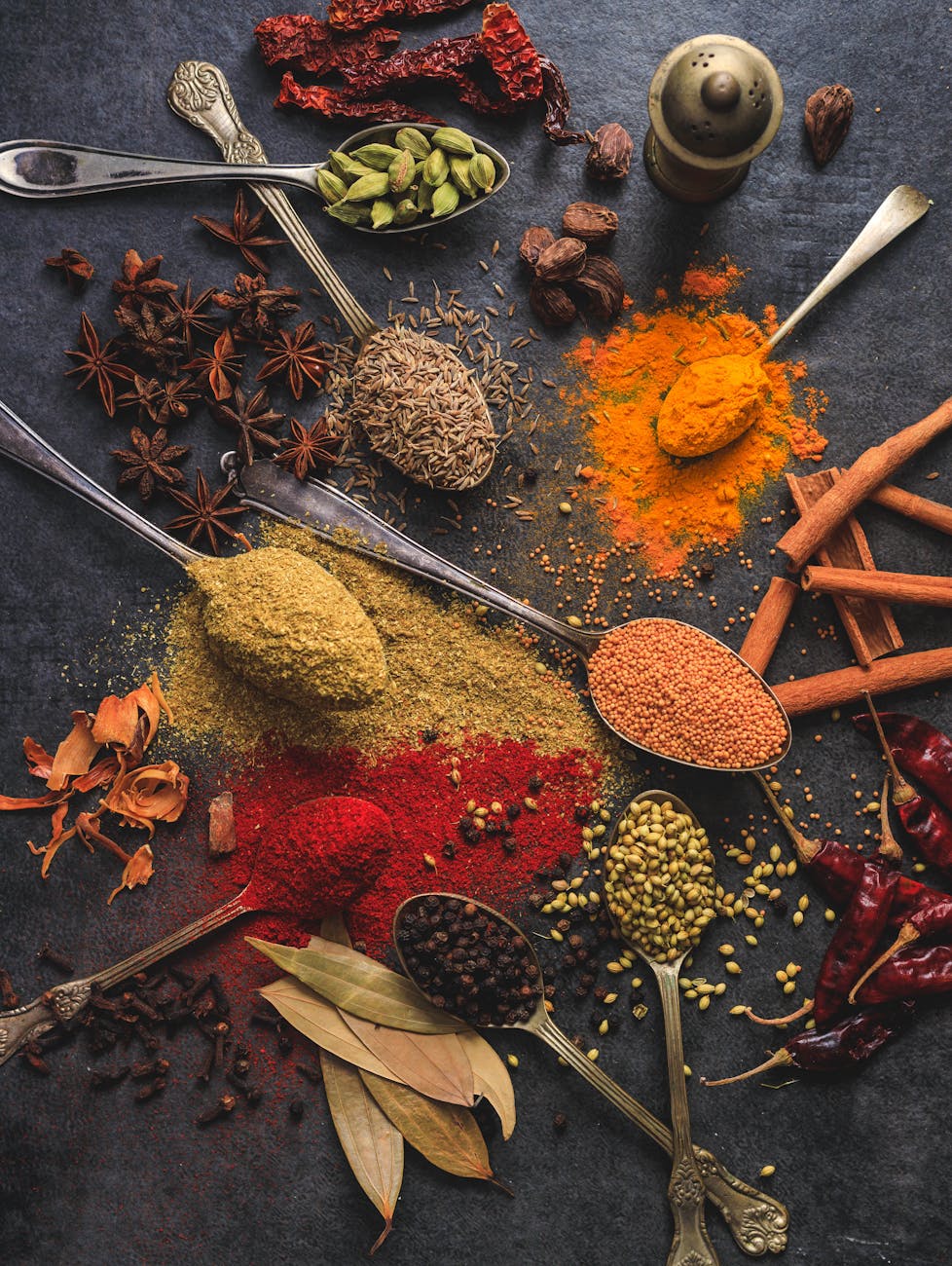
The dawn of a fresh new year seems to have every man and their dog following some radical regime, or drastic lifestyle change, designed to help them embody optimal health. Of course, some people will thrive, as their new vegan diet, perhaps, reinvigorates a love for cooking, and their body relishes the abundance of plants and antioxidants its receiving. However, it goes without saying that equally as many people will become increasingly miserable, as their decision to give up chocolate leaves them spiralling into the January blues…
A recurring, somewhat toxic theme with our resolutions, seems to be that they involve cutting something out – usually something we enjoy. Whether its alcohol, sugar, screen-time or meat, restriction seems to be the unifying factor. It seems to me that this is why 80% of resolutions fail by February. So, what can we do to enhance our health and wellbeing, without eliminating the things we love?
My answer; The Spice Rack.
Whether you’re a seasoning specialist, or haven’t used a herb since 2004, delving into the jars and tubs at the back of the cupboard could be the wellness hack you’ve been searching for. From keeping winter sniffles at bay, to enhancing heart health, or alleviating joint pain, the alleged benefits of herbs and spices are vibrant and manifold. What’s more, they’re generally cheaper than the countless magical supplements being advertised to us on the daily.
- Turmeric
Widely renowned for its spirited orange-yellow hue, turmeric is the sunshine of the spice world. Its earthy, delicately bitter taste has long been used to add colour and depth of flavour to classic Indian dishes like pilau, biryani and kedgeree. Furthermore, this South-East Asian member of the ginger family has been an ingredient in natural medicine for around 4000 years, and for good reason…
Feeling the wrath of wrinkles? Turmeric could help. As an antioxidant, turmeric may protect the skin from damage. ‘Free radical’ are highly reactive and unstable molecules made by the body as a byproduct of normal metabolism, and after exposure to environmental toxins like tobacco, asbestos or UV light. These cheeky atoms have only one electron, and are therefore constantly searching for another molecule or atom to pair with. This process may harm human cells, thus accelerating the ageing process and the development of diseases like cancer. The role of antioxidants, however, is to stop the formation of free radicals, and alleviate their effects as a result.
Furthermore, this golden girl contains curcumin, a polyphenol which may reduce the signs of ageing by changing bodily levels of certain proteins involved in the ageing process, and the development of age-related illnesses. Turmeric’s vitamin E content is also key. A common ingredient in skincare products, it is credited with plumping, moisturising and elasticating properties – leaving skin looking as smooth and youthful as a baby’s bottom.
Next on turmeric’s long list of potential benefits, is an ability to alleviate joint pain, and positively impact arthritis symptom, thanks to its anti-inflammatory properties. The aforementioned curcumin has been linked to reducing cancer spread, and protecting against cardiovascular disease. Not only this, but turmerone could play a role in treating cognitive diseases like Alzheimer’s as it may trigger cell repair and support brain function recovery!
Research into these areas is somewhat limited, but turmeric is safe for most individuals, therefore it seems like a wise idea to start sneaking it into your diet…
The possibilities to experiment with turmeric in the kitchen are vast and varied. Of course, tossing it into your Rendang or Masala is easy enough, but why wait until dinner time to get your fix? For an immune-boosting breakfast, try Avocado Toast with Turmeric Eggs.
You will need;
- •2 slices of your favourite bread
- •2 eggs
- •An avocado
- •A garlic clove
- •1 tbsp turmeric
- •The juice of 1 lemon
- •A tbsp of coconut oil
- •Plenty of black pepper
Begin by smashing your avocado with the lemon juice and garlic clove, then set it aside. Next, heat the coconut oil in a frying pan, before beating your eggs with the turmeric and adding them to the pan. Cook over a low heat, constantly moving the eggs, until you have a fluffy scramble. Toast your bread, spread over the avocado, and top with your golden egg mix. Finish it off with ample black pepper and salt to your taste.
Not only is egg and avo a time-honoured combo, but turmeric is fat soluble, therefore consuming it alongside the avocado and coconut oil may help you absorb more into the bloodstream. What’s more, black pepper contains piperine, which slows down the absorption of curcumin, helping it pass through our system more easily. Finally, heating your turmeric in the eggs is said to increase the solubility of curcumin by up to 12 times, increasing its bioavailability in the body.
Long story short, this is a breakfast of dreams.
2. Basil
A regular suspect in Italian and Asian cuisine, basil has applications stretching far beyond your Caprese salad. Soft to the touch, mildly sweet and carrying hints of mint, basil has long been used in essential oils, Ayurvedic medicine and Chinese medicine.
The same leaves we toss into pasta sauces were first used to promote blood circulation after birth, and to treat kidney and stomach disorders, amongst other things. Nowadays, preliminary research has suggested basil could protect against cell damage, help manage blood pressure and blood sugar levels, and enhance cognitive function.
Packed with antioxidants, basil can shield against free radicals, and therefore may aid in deterring conditions like cancer, cardivascular disease, cataracts and arthritis, all of which can be triggered by oxidative stress. Test tube studies have also found basil seems to be able to limit cancer cells’ ability to grow and divide, thus there is a growing body of evidence to suggest it could be used as a cancer prevention tool.
What many people don’t know, is that there are multiple types of basil, each with slightly different flavours and properties. One of these such varieties is Holy Basil. Offering a much more pungent, peppery flavour, it is highly valued in Hindu culture as an embodiment of the healing goddess, Tulsi. As an adaptogen, it is credited with helping the body adapt to stress, whether this be emotional or physical, and could be used to ease anxiety and promote good mental health as a result. The best part; you can grow it on a windowsill.
In my humble opinion, there are few savoury dishes which wouldn’t benefit from a few sprigs of basil. Whether its a hearty tomato soup, a charmingly cheesy lasagna, or a zesty lemon chicken traybake, basil is your best friend at the dinner table. This said, it can make a starring contribution to breakfast too.
For a Strawberry Basil Smoothie you will need;
- •1 tbsp chia seeds
- •A handful of spinach (fresh or frozen)
- •100g strawberries (fresh or frozen)
- •100g plain greek yogurt
- •200mls milk of your choice
- •12 fresh basil leaves
- •A squeeze of lime juice
- •1 tbsp honey
Simply add all the ingredients to a blender, and whizz until smooth. For a thicker consistency you can add less milk, or more for a thinner one. Combining basil and strawberries makes for a deliciously sweet and savoury flavour profile, which is made all the more tasty with a sprit of zesty lime, and a generous splash of honey.
From a nutritional standpoint, this highly portable morning meal is liquid gold. To begin with, spinach is an old favourite when it comes to hidden benefits. You won’t taste the handful of greens, but you will get a decent amount of iron, calcium and various other vitamins and minerals. Strawberries are natures candy, providing antioxidants and vitamin C alongside their summery palate, and using frozen means all the nutrients of a fresh berry is preserved. Basil gives the smoothie calcium, vitamin A, K, manganese, magnesium, iron, zinc, and potassium, hence why it is the star of the show here.
On their own, these delightful plants make for a refreshing beverage, but adding chia seeds, milk and greek yogurt gives this recipe more substance. Chia seeds are a favourite in the nutrition realm as just a tbsp contains 5g of fibre, 2g of protein and 2g of essential omega-3s, amongst various other enticing benefits. The type of milk you choose will vary in protein content, but even most plant-based milks are fortified with calcium, critical to building strong bones. Greek yogurt not only makes for a creamy texture, but is rich in protein, calcium, and B12, as well as gut-loving probiotics. Finally, honey sweetens the deal in more ways than one – credited with having immune-boosting and antibacterial properties, its a great way to make any meal more palatable.
3. Cinnamon
Cinnamon is for life, not just for Christmas.
Warming, highly aromatic and nostalgically sweet, cinnamon is sourced from the inner bark layer of a small Sri Lankan tree. It has a glowing track record when it comes to medicinal uses, and was traditional consumed as a digestive aid (in addition to being used to add a pleasant fragrance to embalmed mummies).
Much like other spices, it contains polyphenols with those protective antioxidant properties, and anti-inflammatory effects. The reason cinnamon differs from the likes of turmeric, for example, is due to the fact it contains a substance called cinnamaldehyde. Not only does this give it its distinct taste and aroma, but test-tube studies have shown it to have certain anti-bacterial and anti-fungal powers. Whilst more human research is needed to confirm these benefits, cinnamon oil may aid in fighting respiratory infections, as well as inhibiting growth of listeria and salmonella.
Similarly, cinnamon obtained from Cassia trees may be effective in steeling the body against influenza, Dengue and even HIV. What’s more, consistent consumption of cinnamon was shown to reduce triglycerides, cholesterol and LDL cholesterol, indicating it could reduce risk of heart disease – the cause of a quarter of all deaths in the UK.
Yet another reason not to limit cinnamon to scented candles, is its role in blood sugar management. Trials have shown that, by interfering with digestive enzymes, cinnamon is able to slow the breakdown of carbs in the digestive tract, thus decreasing the amount of sugar which enters the bloodstream after eating. This effect may be beneficial for diabetes sufferers, and, those with insulin sensitivity may see results too!
Unbelievably, cinnamon’s list of talents goes on and on, but its important to acknowledge that there is a slight difference between varieties of the spice. All cinnamon is generally safe in small amounts for all individuals, yet ‘cassia’ cinnamon (the type most commonly found in our supermarkets) contains coumarins, which can cause toxicity in large doses. The other type of cinnamon, ‘ceylon’, has much lower levels of coumarins, thus may be a better option if you can get it.
Cinnamon for breakfast is pretty mainstream. Many of us often sprinkle a little on our porridge, add a dusting to a yogurt bowl, or eat it in a gloriously squishy cinnamon roll. Should you wish to embrace your inner culinary god or goddess, however, this Cinnamon Granola is a healthful way to add crunch to any morning munch, and fill your kitchen with sumptuous spicy aromas.
To whip this up you will need;
- • 150g maple syrup
- •100g melted coconut oil
- •1.5tsp vanilla extract
- •1tsp salt
- •360g oats
- •100g unsweetened coconut flakes
- •100g seeds of your choice
- •50g extra dark chocolate chips (ideally 70% cocoa or darker)
Begin by preheating your oven to 160 celsius and lining a large baking tray with paper. Next, simply combine the maple syrup, melted coconut oil, cinnamon, vanilla, and salt in a large bowl. Add in the oats, seeds and coconut, then pour the mix onto the parchment paper, spreading it evenly over the surface, and squashing it down with the back of the spatula. Bake for 10 minutes, give the granola a shake around the tray, then return to the oven for another 15-20 minutes. When your granola is golden, crisp, and extremely tempting, remove it from the oven, and allow to cool completely.
Return to your cinnamon-scented kitchen, and scrape the granola into an airtight container, mixing in the chocolate chips as you go. If you can resist consuming it right that very minute, this will keep fresh at room temperature for around a month!
At a glance, this recipe might seem like more of a treat than a healthy breakfast recipe, and whilst it is by no means ‘low-calorie’ or ‘low-sugar’, it is extremely nutrient dense. Of course, adding cinnamon brings all the aforementioned benefits, but the other ingredients are not without talents…
Maple syrup, of which Canada exports 70% of the world’s supply, is rich in antioxidant, contains a periodontitis-fighting compound ‘quebecol’, may support healthy digestion, and reduce LDL cholesterol. So, although it does contain 68g grams of sugar per 100g, it could definitely be considered a health food in moderation. Coconut oil helps bind the granola together, and is around 86% saturated fat, but, around half of the medium-chain fatty acids its made up of are lauric acid – a substance that gives it anti-inflammatory, anti-microbial and anti-fungal properties. Unsweetened coconut flakes add a nutty hint to the flavour, but also act as a source of copper, iron, selenium and fibre. Seeds help ensure the granola is satiating, and keeps you full until lunchtime, thanks to their protein and healthy fat content, and depending on the types of seed you use, they will elicit various other benefit.
Oats are a timeless breakfast staple for a reason. Vast amount of fibre, whole grains and carbs, they are a heart-healthy energy source perfect for kicking of your morning. Last but certainly not least, dark chocolate is a soul food, and contains zinc, iron, and polyphenols. Some studies even suggest it may improve brain function. As one of the best dietary sources of flavanols – chemical compounds found in certain fruits, veg and plants with reported antioxidative, anti-inflammatory, and antiviral properties – it may improve vascular health, thus improving blood flow in the brain too.
4. Chilli Powder
There are very few spice cupboards that don’t have a some form of chilli lurking around. Crushed, powdered, or dried, chilli peppers are fiery, flavoursome and full of feisty benefits. Somewhat surprisingly, capsicum plants were one of the first crops to be cultivated in the americas, and, though they originated in what is now Pery and Bolivia, have become an integral ingredient in countless global cuisines. There are now around 4000 varieties of chilli grown worldwide, and drying these spicy suspects means they can be preserved for months on end, and transported across all seven continents.
The Mayan and Aztec people of South America were the first to advocate for the medicinal properties of capsicum. Before they were became an indispensable cooking aid, they were used a a remedy for sore throats, stomach pain, rashes and arthritis. What’s more, the Aztecs used them as currency, and the Mayans believed them to have spiritual significance – with their fiery essence facilitating a pathway to enlightenment and connection with a higher realm!
The main bioactive compound in chilli is capsaicin, and chillis do supply Vitamins C, B6, K1, Potassium, Copper and Vitamin A, yet as very few of us are physically able to nibble on a whole chilli, we only get very small amounts of these nutrients from them. Nevertheless, the aforementioned capsaicin (responsible for the hot flavour) is just one of the active substances in chillis which elicits benefits…
Lets begin with Synapic and Ferulic Acids, as antioxidants, they offer antimicrobial, anti-inflammatory, anticancer, and antianxiety benefits, and the latter substance can improve the appearance of wrinkles and sun-damage – so chilli could have you looking 10 years younger. The carotenoids Violaxanthin and Capsaicin, are extremely responsible for the vibrant colour of yellow and red peppers respectively. In connection with this they are antioxidants, may support eye health, and are being researched in relation to their potential in cancer treatments.
Capsaicin is responsible for the familiar burn we experience when eating chilli, as it binds to pain receptors in our mouth. You might have noticed that consistently eating spicy foods helps you become accustomed to the fiery taste, as your pain receptors become desensitised. ‘Pain relief’ may not be the first thing that springs to mind when you consider the vindaloo you ate last Saturday, yet this desensitisation effect also applies to pain receptors elsewhere in the body, meaning chilli could reduce vulnerability to other forms of pain too.
If your’re searching for a breakfast that gets you a little hot under the collar, these Chilli Butter Beans on Toast are certain to spice up your morning.
Take;
- •1 can of butterbeans
- •2 cloves of garlic
- •1 vegetable stock cube
- •1tsp chilli powder
- •1 can of tinned tomatoes
- •2 slices of sourdough to serve
- •Chilli flakes to serve
Heat a little oil in a pan, then add in the garlic, and fry until fragrant. Drain the butter beans, then add to the heat along with the tomatoes, stock cubes and chilli. Allow the mixture to simmer, seasoning with salt and pepper if you fancy, then when it has thickened to your desired consistency, serve atop toasted sourdough with an extra sprinkling of chilli flakes.
This meal is protein packed and contains two of your five-a-day. Furthermore, garlic has its own superpowers such as protecting against viruses, reducing blood pressure, and even improving athletic performance!
5. Dill
Few fish dishes are complete without a couple of fluffy sprigs of dill to garnish, and though its native to mediterranean climates and western Asia, it is easily grown on UK windowsills.
A herb steeped in historical significance, over 5000 years ago, in early Egypt, dill was considered an aphrodisiac, the Greeks saw it as an omen of good fortune, and the Romans thought it to be a good luck charm. The word ‘dill’ has norse roots, meaning ‘to lull’, thus indicating its calming effect. Furthermore, it features in religious literature, with Puritans and Quakers reportedly feeding dill seeds to their children during church, as it acted as an appetite suppressant.
In Ayurvedic medicine, dill is cherished for its calming effects. It is believed to have antispasmodic properties, and to be a digestive aid, therefore it is included in countless antiflatulence and digestion remedies. As is becoming a theme with these herbal heroes, dill is packed with antioxidants, so its consumption may carry all the same associated benefits of decreased inflammation and chronic disease prevention.
In addition to supplying vitamins C and A, folate, iron and manganese, some evidence implies that dill may be able to ease menstrual pain. This is, once again, thanks to its relaxant effects.
Natural remedial qualities aside, fresh, grassy undertones, hints of citrus, and delicate sweetness means dill has a broad culinary repertoire. In Scandinavia, it is frequently used as flavouring for pickles, cured fish and in zesty salads – no Gravadlax would be finished without some feathery fronds! Its also a staple in Eastern European cooking, in Borscht or as an accompaniment to pretty much anything!
In essence, there are few recipes which couldn’t be upgraded with a bit of dill, from omelettes, to quiche, salad dressings and seafood, it versatility is endless.
If the British winter has you craving some sun, these Tzatziki and Beetroot Breakfast Flatbreads could be your ticket to the sun-kissed shores of the Aegean.
To whip up some vibrant, grecian inspired grub, you will need;
- 1 flatbread or pitta (wholemeal if possible)
- 250g Greek or Greek-Style yogurt – often ‘premium’ brands will be more authentic and have a thicker texture
- 1/2 a cucumber, finely diced
- 1 garlic clove, crushed
- Plenty of fresh dill!
- Juice and zest of 1/2 a lemon
- Salt and pepper to season
- 100g pickled beetroot
After visualising yourself swanning around a rustic kitchen in rural Santorini, fingers of morning Mediterranean sunshine dappling your worktops, put the diced cucumber in a sieve over a bowl, and sprinkle it with some salt. Leave it for a few minutes then pat it lightly with some kitchen paper. This will help remove any excess moisture. Next, add the cucumber, yogurt, lemon, garlic and dill to a bowl and mix until combined, seasoning to taste.
Next, toast or warm your flatbread, then spread generously with the tzatziki mixture, and top with some extra dill. Finally, slice the beetroot, and lay them on top of the creamy yogurt.
Of course, you could make your own flatbreads with just flour, baking powder, yogurt and oil, but store bought are often quicker and just as tasty. What’s more, if you don’t finish the tzatziki all in one sitting, it can be kept in the fridge and served with crudities, crisps or with an evening meal!
Greek yogurt is a classic base for many sweet breakfasts, but it can shine in savoury dishes too. 250g contains around 25g of protein, so when served atop the flatbread, this dish delivers upwards of 30g of the stuff, a great start to the day. In addition to this, there is calcium, B12 and probiotics to sweeten the deal. Beetroot adds more than just an eye-catching hue, pickled foods are hugest popular for the gut boosting live bacteria they contain, thus they may aid digestive health, and the vinegar they are found in is thought to help regulate blood sugar and insulin levels after a meal.
A spicy solution
In essence, consuming more herbs and spices is unlikely to revolutionise your wellbeing unless combined with a healthy lifestyle and overall balanced diet. Nevertheless, when the alleged benefits range from brain-health to beauty, there is certainly no harm in giving your breakfast a little boost!


 The Sprightly Spud
Leave a comment