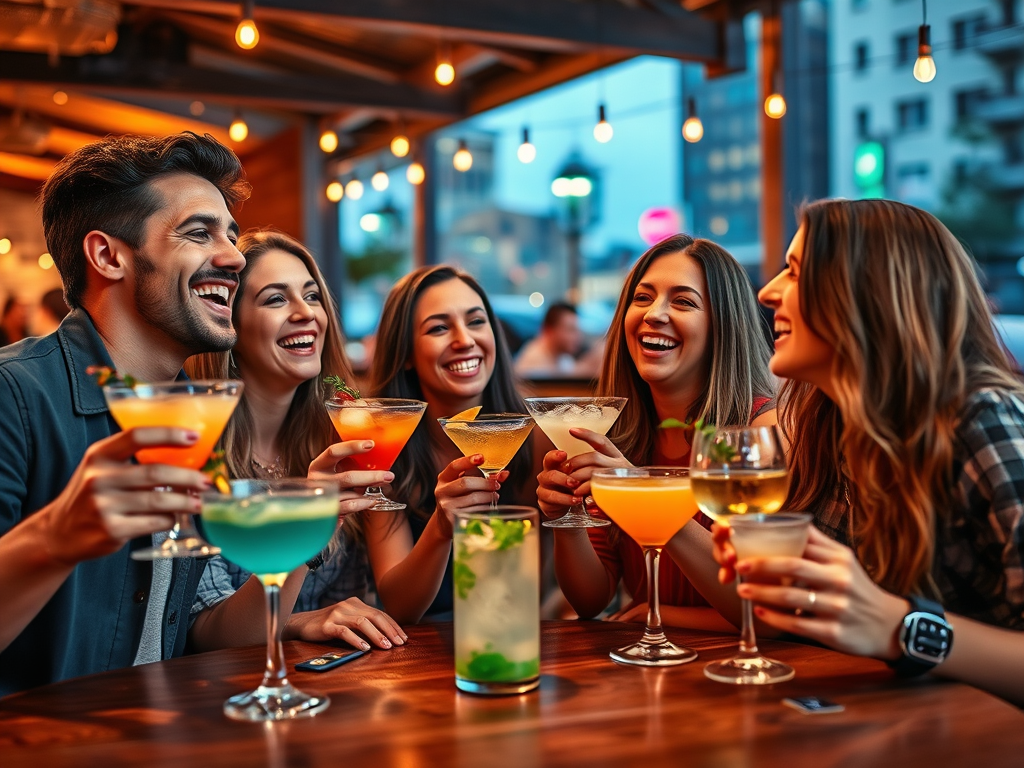
Those of us in our 20s have a reputation for indulging in wild nights of revelry, boozy benders, and alcohol – fuelled party holidays, where memories are made, and friendships (or ‘foeships’) are fortified for life. The reality, however, is that more and more of us are ditching the margs for mocktails.
A 2024 YouGov survey found that Gen Z are actually the UKs most sober age group. But why? And what are we doing instead to have fun?
Why We are Binning The Booze
- We don’t have the cash
Picture this; you’re a young professional living in Clapham. Your rent devours most of your salary, and even looking at the amount you spend on tube fares makes you queasy. When Saturday rolls around, you plan a celebratory night of dancing at ‘Inferno’s’, which boasts London’s Greatest Party. You can grab a standard entry ticket for £10, but the comfort of a table will leave the group around £35 poorer (plus the initial entry cost).
Theoretically, you could cap the spend here, and return to your cosy flat at 3am, having consumed nothing but lukewarm tap water. Obviously, the exact alcohol consumption of an individual on a night out will vary based on a myriad of factors. Did you pre? What’s your personal tolerance? The list goes on… This being said, three alcoholic beverages would be achievable for most (if not minimal).
If you’re on the pints you’re looking at an extra £20 or so on your bill, but three double vodka Red Bulls would total £39. Factor in the emergency chicken doner you demolish on the way home, and by the end of the night you’ve spent upwards of £40, at the very least.
“Worth it for the mems”; some might argue – but this relies on you having any recollection of the event the next day…
Drinking at home, though definitely cheaper, could still be seen as an unnecessary expense as we struggle through a nationwide living cost crisis. ONS statistics show that the average young, active woman in the UK spends £44 on groceries each week, with this figure increasing to £47 for men. Additionally, they may spend £14 and £15 respectively on takeaways or eating out. Already, these spends are more than that of older, less active individuals, simply due to increased caloric needs, meaning we are at an immediate financial disadvantage!
After a week of long days on the corporate treadmill, should one pop to CLap[ham’s Tesco Superstore in pursuit of a few drinks, you may choose to pick up some beverages to kick off Friday night for you and the girls; 2 bottles of (the cheapest) prosecco, and 4 cans of All Shook Up Cocktails (on a Clubcard offer) seems like a perfectly reasonable haul for four well-deserving women. Nevertheless, its set you back £15.10 – 37% of the amount you spent on your weekly grocery shop!
The fact of the matter is, drink is expensive, no matter where you buy it, and what we choose to spend our precious disposable cash on is changing…
2. Wellness
What do you mean you’re 25 and you haven’t ran a marathon yet?
Whilst social media certainly exaggerates and glamourises the extent to which 20-30 year olds prioritise wellbeing, we are certainly into our fitness. From aerial yoga to iron man triathlons, there’s no shortage of active pursuits to dive into, and the breadth of activities on offer is endless. Not only this, but we are desperate for knowledge and insight into our bodies, with products like Whoops and Oura rings providing in depth analysis of our sleep quality, readiness to train, and overall recovery. Critically, they also assess how alcohol consumption impacts HRV, sleep, and athletic performance. Obviously, this will vary between individuals, but the general consensus is that drinking isn’t conducive to PB performance.
Whoop has a yearly subscription price of £229 – making it easy to see how one’s budget for booze could be severely compromised.
Even those just training ‘for the fun of it’, are likely having to invest. Yes, one can pick up a budget gym membership for under £20 a month, but more luxurious options like Third Space or equinox, have much steeper demands, with rates ranging from £230 to £305 for access to the Capital’s most plush fitness locations. It might seem extortionate, but the reality is that people do buy the memberships – thus indicating a significant willingness to invest in our bodies.
Classes are another big player. Gyms such as 1Rebel, Barry’s and Psycle offer high intensity, high impact burst of fitness, designed to suit those craving a cracking workout, on a time crunch. Many would also say that they gain a social benefit from attending a class (rather than training alone), perhaps replicating the sense of togetherness one might previously have got from drinks at the pub? Once again, however, health comes at a cost, committed Psycle attendees, for example, may bulk buy their class passes, opting for a 50 credit bundle at £900. These precious tokens are usable in any of their Ride, Strength, Barre, Yoga or Reformer classes, leaving plenty of opportunity to find fellow fitness folk who share your values and zest for life.
Irregardless of why you choose to frequent a group training class, no one wants to be hitting 190bpm in a spin class with a hangover.
Spending habits aren’t the only thing changing. Free social wellness activities are also on the rise. Its no longer possible to take a Saturday morning stroll without bumping into a run club, making it seems like our socialisation hours have flipped. I know for a fact that I’m much more fond of a ‘9am jog and pastry’, than ‘9pm cocktails and kebab’.
3. Performance
For the most part, young people exercise to look good, feel good, socialise, and, quite simply, for enjoyment. There are, however, another ilk for whom training is so much more. Social media makes it hard to ignore the rise in people taking physical activity to the extremes. We’re not just talking about marathons and Hyrox events, but rather Ultras and Iron Man Triathlons. 26.2 miles is a feat in itself, and takes admirable training and dedication. 26.2 miles of running immediately after a 2.4 – mile swim and a 112 – mile bike ride is a whole other monster. Whatever the reason behind the surge in popularity for these (somewhat crazy) undertakings, preparing to endure them requires Herculean discipline in your diet, training, and all – round health, often demanding juggling multiple training sessions with a full – time job. I’m a firm advocate for the theory that ‘the body achieves what the mind believes’, but no body can cope with that volume without being kept at its prime.
Alcohol does not aid the achievement of optimum. As a diuretic, it can make dehydration more likely, particularly when sweating during training, thus compromising performance, it causes your blood sugar levels to fall, interfering with how energised you are for performance, and contains calories, but no macronutrients, which could cause weight gain in the long run. Furthermore, it impacts sleep and may impair muscular recovery.
As a generation with big performance goals – no matter whether that be a 5km pb or a sub 5 hr 70.3 – many of us are doing our absolute best to reach the pinnacle of our potential, and alcohol just isn’t helpful. You’d rarely see a professional athlete drinking in a training or racing season, hence why we aren’t either.
4. We’re drinking other stuff
Electrolytes
On the topic of high intensity training and wellness, electrolytes are emerging as a key part of many of our daily routines. The UK electrolyte drink market generated a revenue of $446.3 million in 2024 a figure expected to grow to $737.1 million by 2030. Fuelled by influencers, a growing awareness of the importance of hydration, and the aforementioned increase in how many of us are pursuing an active lifestyle, it seems lunchtime pints of lager are being pipped by morning pints of sodium, potassium and magnesium.
For athletes, the likes of Gatorade, Lucozade and even homemade salt and water concoctions have long been a functional part of training and recovery. After a heavy session, they are crucial in regulating nerve and muscle activity, ensuring adequate hydration, balancing blood acidity and pressure, and rebuilding damaged muscle tissue. Brands like HUMANTRA, LMNT and Waterdrop are making salt sexy, and normalising it in the gen pop realm. HUMANTRA, for example, retails highly convenient 4g sachets, available on a subscription service, or for one – time purchase. Natural, sugar – free, and sporting Calcium, Phosphorus, Magnesium, Zinc, Chromium, Chloride, Sodium, Potassium, Vitamin C and Vitamin B12, HUMANTRA advertise a range of potential benefits for athletes and non-athletes alike. These included sustained energy, headache relief, cognitive clarity, skin health and even reduced bloating.
Contrary to popular belief – and social media propaganda – not every individual needs to be drinking electrolytes everyday, and the alleged benefits of electrolyte beverages will only really be seen if you have an imbalance to start with. Our bodies are extremely proficient at maintaining equilibrium on its own, and its only really in specific situations that it may need support; intense, long duration, or very sweaty exercise, or after an illness that has caused fluid loss.
Necessary or not, for most healthy folk, one electrolyte drink each day is unlikely to cause harm, and definitely won’t lead to a hangover…
Coffee
Turn any London corner, and you’ll spot a coffee shop. In fact, its believed the city boasts around 3700 of them! Whether its a quaint, independent establishment, serving delicate flat whites in ceramic mugs, a boujie roastery with an ample selection of homemade pastries, or one of the myriad branches of the chains we all know and love, there’s no shortage of places to grab a cup of joe.
Even larger than the selection of outlets, is the selection of drinks on offer. Gone are the days of simply choosing between an americano or a latte, and (rightly or wrongly) 20 somethings have become infamously specific when it comes to their orders. The stereotype of ordering something along the lines of a decaf oat milk Frappuccino, with an extra shot of espresso and two pumps of sugar free caramel, may be true for some of our generation, however there’s also a growing demand for knowledge about the sourcing, sustainability and ethics of our brew. We are, it seems, caffeine connoisseurs. Gail’s, for example, proudly publicise the intricate details of where its house blend comes from; three specific farms in Peru, Brazil, and Nicaragua. Each have unique and pioneering approaches to fertilisation (with the Peruvian co-operative capitalising on the nitrogen content of guinea pig manure to maintain peak soil conditions), employee wellbeing, and sustainability. Not only do we value the greater good of our Gail’s, but the impact on the flavour too. Phrases such as ‘distinctive notes of chocolate, dried fruit, roasted nuts and caramel’, draw us in – hence why we are often willing to pay upwards of £4.50 for our en-commute coffee, and a couple of teaspoons of instant (soil) just isn’t cutting it anymore.
We may not automatically associate coffee with health benefits, and some would argue that caffeine is an anxiety triggering, gut destroying, palpitation inducing monster. Sure, in excess, this may be the case, but theirs also evidence that it may do us some good. Moderate consumption is linked to lower risk of stroke, type 2 diabetes and heart disease, largely due to its antioxidant content. Those seeking even more bang for their brew may choose so called ‘functional’ blends, which combine classic beans with a host of vitamins, adaptogens and superfoods. They can elicit a range of advantages, from improved mental clarity, to amplified skin health. Some of the most popular offerings utilise fungi like lions mane in order to cultivate a lower caffeine drink with focus-boosting and probiotic properties.
Beyond the bean, there is a much deeper significance to coffee for many 20 somethings. Particularly in the era of ‘work from home’, coffee shops facilitate social interaction that many of us lack, meaning your flat white may act as a catalyst for friendship, whether that be with a barista, or fellow customer. Modern life has the potential to be extremely isolating, thus we often choose to perch amongst the bustle of a cafe with our laptops, rather than fester, alone, in a tiny flat. Whilst, in theory, you could relocate your home office to a local bar of an evening, your boss may not approve, and the effect of three G+Ts on your accounting work may not be entirely positive.
On the other hand, we’re also rather fond of gourmet coffee at home. It seems we enjoy the art of steaming milk, selecting beans, and engaging pure focus when pouring our organic coconut milk atop a shot of espresso. The initial outlay of a fancy machine may be steep, but over time, home barista – ing is more economical too.
In essence, wherever we source of coffee, the practice of taking a gentle stroll with a to-go cup and a friend, may soon overtake that of battling over 100s of other voices to have a chat in a cocktail bar. Consequently, for those of us in our 20s, coffee is so much more than an energy yielding hot drink to get us through the morning. We look for distinctive flavours, a social experience, and the ability to improve our wellbeing through its consumption. Is this perhaps replacing the interest prior generations had in types of alcohol?
Matcha
To the untrained eye, the verdant hue of matcha may be a little off-putting, or may lead to it being mistaken for a kale – based smoothie. Nevertheless, the global matcha market is expected to hit nearly $5 billion by 2028 – and Gen Z are largely forming the ammunition for this growth.
Dating back to ancient China and Japan, matcha tea was initially consumed as a medicinal beverage, and was reportedly drank by Samurai warriors to facilitate mental and physical recovery from the bloodshed and trauma of war. Much like the ancient Samurai, modern matcha can be used to elevate mood, and the body, thanks to high levels of catechins (an antioxidant), and theanine, which has a calming effect.
Then and now, the ritual of making matcha is highly significant, and those truly committed to the zen culture may opt for organic whisks and natural utensils – reflecting unity with nature. We love a romanticised drink, steeped in cultural history, but we also love a more inventive take on a classic, with drinks available in all sorts of flavours (potentially masking the earthy notes of the unadulterated tea) from white chocolate, to cookies and cream.
Overall, whether its coffee, matcha, electrolytes, ‘fake’ alcohol, or just plain old fizzy water, it seems we are leaning towards beverages that add something into our lives, whether that’s energy, vitamins, or social interaction. Many of us have, or have had, perfectly healthy relationships with alcohol, yet still find it takes away from our wellbeing, rather than enhancing it…
5. Mental Health and Safety
It does not take a scientist to realise that alcohol, as a depressant, slows down brain activity. As a result it has an effect on the neurotransmitters in our brain that influence inhibition and decision – making, hence why its often used as a tool to increase confidence in social situations. Initially, that couple of drinks might leave us feeling relaxed, confident and even courageous, thanks to the effect of booze on GABA receptors. As we continue to throw back beverages, the brain also shuts off glutamate, subsequently reducing anxiety and inhibition further. The period of calm, however, is short – lived. As the body attempts to regain chemical balance by increasing glutamate and reducing GABA, the soothing effect is reversed and redoubled. AKA ‘hangxiety’ – the anxious sensation we get the day after drinking, as blood alcohol levels return to zero.
Not only may these effects in themselves not be entirely pleasant, but, a lack of impulse control, and an increased tendency to make rash decisions, can result in actions that are somewhat less than wise. This only serves to worsen hanxiety, particular if we suffer from memory gaps after drinking!
Psychological suffrage aside, the physical effects of a hangover are enough to trigger anxiety in themselves. The prospect of waking up with a debilitating headache, nausea, and overwhelming cravings for McDonald’s hash browns, is never an attractive one. For the goal – oriented, hustling, Gen Z city slickers, it could even get in the way of their plans for world domination.
Though some crave the feelings of freedom and relaxation alcohol brings, for others, letting go is terrifying. For a huge proportion of Gen Z, particularly women, drinking makes them vulnerable, and at greater risk of attack or assault.
On a more serious note, alcohol addiction will forever be a problem, and its only natural for some people to steer clear of drink, in fear of developing an unhealthy relationship with it.
Thankfully, awareness of mental health, and the impact alcohol may have on it, is more and more prevalent each day, giving those who wish not to drink more freedom to do so. Thus, we have another reason for the increase in sobriety in our 20s.
6. Experience – Based Nights Out
There was once a time where ‘fun’ things to do were largely restricted to drinking, the cinema, or bowling. These days, however, the scope of activity-based activities and nights out is ever-growing and endless, meaning the pressure to drink is lessened. Regardless of whether your company is friends, a date or family, giving the night a focus acts as an ice-breaker, hence we don’t feel the need to play a drinking game to get the conversation going.
Unfortunately there’s regional differences in what’s on offer to add flair to your Saturday night, and London certainly holds the crown. Just to name a few; ‘Bounce’ offers state of the art ping – pong based games, ‘Fairgame’ sports an arcade style venue with ample opportunity for friendly rivalry, and Tottenham based ‘Roller Nation’ offers the perfect opportunity to re-hone some childhood skating skills…
Even outside of the capital, pottery and craft nights, rage rooms, and crazy golf centres with a vast range of themes are becoming more and more prolific, and whilst most do have bars on site, so you can pick up a cocktail or two, the need to drink is eliminated, as the fun is coming from elsewhere. Whether its axe-throwing or Bollywood dancing, often these spaces capitalise on our competitive nature, so literally provide the dopamine hit we may have previously sought through booze.
The Brands Making Sobriety Sexy
Changes in consumption mean only one thing in 21st century business:
New products for us to wrap our alcohol – free paws around.
There’s a time and a place for a pint of electrolytes, glass of iced water, or crisp Diet Coke, but there’s also a demand for beverages that add a little more sparkle to your evening and instil that sense of celebration.
Days Brewing
Most of the big name beers offer a 0% option, but some have taken the assignment to the next level. Days, founded by lifelong friends Mike and Duncan, use purely Scottish water and Barley, to produce 0.0% lager and ale, without even employing de – alchoholisation treatments which, they claim, would compromise the integrity of their premium ingredients. They were driven by a desire to produce a brew fit for ‘modern mindsets’ – those who prioritise fitness and mental health, and want to curb their alcohol intake. As a B-Corp, they use 100% recyclable materials, but contribute significantly to charities like Mind and Run for Heroes, and are endorsed by elite athletes such as Tom Mitchell and Phily Bowden.
Three Spirit
Another UK – based brand taking the market by storm is Three Spirit. Combining the expertise of Tatiana Mercer, Dash Lilley, and Meeta Gournay to formulate a “non-alcoholic social elixir”. After working with leading bartenders, herbalists and plant scientists the trio dialled in on a range of functional, plant – based sips, for those who want to ‘let their hair down’, but still be on ‘top form’ the next morning.
With intriguing names such as ‘Livener’, ‘Social Elixir’, ‘Nightcap’ and ‘Spark’, each tantalising tipple is attached to different benefits and occasions. (Much like one might choose Pimm’s on a sunny summer afternoon, but a glass of Prosecco at a wedding.) ‘Livener’, for example, includes guava leaf, green tea, and ginseng, for an exotic flavour profile and energising effect. The guayusa in the blend contains slow-release caffeine, so is guaranteed to offer a boost without the crash, yet the plant scientists have paired it with guava leaf, which helps to regulate energy levels and has antioxidant, anti-inflammatory and anti-bacterial properties. It aids in lowering blood sugar levels and nurtures heart health. Thus, Livener is not only booze-less, but generally beneficial!
Similar to a traditional spirit, Livener can be served on the rock, with mixers, or as part of an elaborate mocktail – which the Three Spirit website provides multiple recipes for – such as a ‘euphoric margarita’, or ‘energise spritz’.
Nightcap, on the other hand, is designed to bring things down a notch. Valerian, a traditional sleep – aid, instils a sense of zen in the drinker, and therapeutic terpene, which is rife with antioxidant, anti-microbial and mood-making functions. Smooth maple and rich vanilla tones make for a mellow taste, and a stress busting beverage.
From an economic perspective, Three Spirit do not seem cheap. One bottle of Nightcap is priced at £25.99, though it is more affordable to buy on subscription or in bulk. Nevertheless, though I would never claim to be an expert in classic choices of nightcap, premium aged Whisky can cost anywhere from £6.50 to £2000 +!
In essence, Three Spirit offers all the fun of a sundowner, with none of the undesirable side-effects, yet more benefits than your standard super smoothie. Its easy to see how these functional tipples suit Gen Z down to the ground. They offer versatility, the added health benefits that appeal to our fitness focus, and the opportunity to make an occasion out of any get – together. It also plays to our fondness for ethics, they are plastic – free, vegan, and have earned B-Corp status.
Schweppes and Wilfred’s
Nothing screams summer like the vibrant orange hue of an Aperol Spritz. The Aperol Liquor was first concocted in 1919 by two Padovan brothers – Luigi and Silvio Barbieri – the beverage was formulated as an aperitivo, designed to stimulate the appetite before a classic Italian feast. The ‘Spritz’ element was added later, when the Campari group developed the ‘3-2-1’ recipe of prosecco, Aperol and soda. Light, citrusy and slightly bittersweet, the standard drink sits at around 11% alcohol, but thankfully booze-less versions are available too…
The Spritz in part owes its popularity to its simplicity, as one can easily embrace their inner mixologist and shake one up at home. Nevertheless, for anyone seeking a cheat, Schweppes offer a canned mocktail version, perfect for painless pouring. In addition to the Aperitivo Spritz, there’s Classic and Blueberry Mojitos, and a Cranberry Spritz available too.
Alternatively, Wilfred’s – the brainchild of engineer and inventor, Chris Wilfred Hughes – has created a drink with all the Spritz, and none of the units. The Brit was disappointed by the lack of non – alcoholic spirit options available, finding the market dominated by sugary, uninspired options. Hughes took his passion for cocktails, and experimented until he found a blend that captured the complexities and intricacies of the flavour of a ‘real’ spirit.
As an intrepid traveller, the entrepreneur sampled botanicals from all over the world, but eventually settled on quintessentially British ingredients for his aperitif; freshly picked rosemary and bitter oranges. To whip up your very own ‘Wilfred’s Spritz’, simply combine 1/3 Wilfred’s Aperitif with 2/3 high quality tonic water, then proceed to serve with style and panache over plenty of ice, and a slice of fresh orange. The more elaborate the glass, the better!
https://straitsresearch.com/report/matcha-tea-market#:~:text=The global matcha tea market,period (2025-2033).


 The Sprightly Spud
Leave a comment