Like it or not, strength training should be firmly on your list of ‘2026 ins’. As a bare minimum, the NHS recommends at least two sessions of resistance training every week, but, thanks to a surging awareness of the aesthetic and practical gains to made, many people choose to do more than this. To the glee of PTs, lifting is becoming increasingly mainstream, and say what you like about ‘fitness influencers’, but the message that the weights section is for everyone, and not just competitive bodybuilders, is beginning to ring clear.
Nevertheless, there’s one piece of equipment that many still find a little overwhelming;
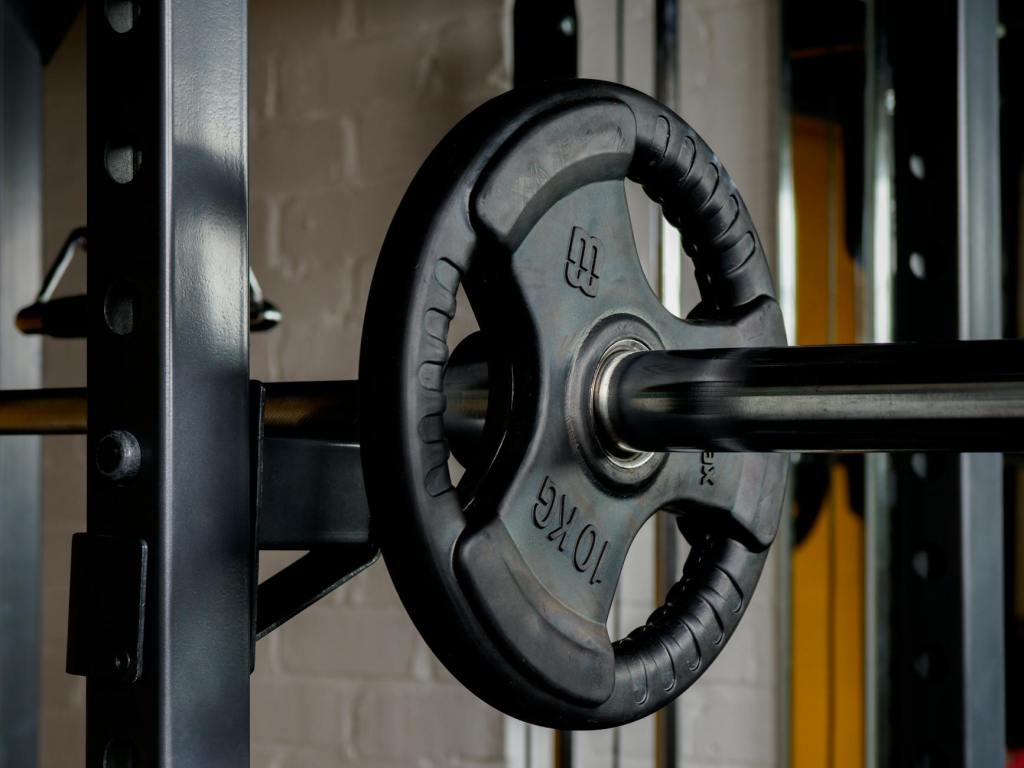
The barbell.
So do we need to be conquering anxiety around this bit of gear, or can we get an equally good workout from less intimidating bits of heavy sh*t?
How do you want to feel when you’re 82?
The best way to train is the way that you enjoy the most. This will allow you to stay consistent, develop a routine, and find stress-relief and solace in movement. Irregardless, making time for a little weightlifting is a non-negotiable for longevity.
First of all, it keeps us strong. Every repetition causes micro tears in our muscle fibres, which providing we maintain an adequate protein and energy intake, will rebuild as more powerful than before. Quite frankly, there’s little not to like about this; who wouldn’t want everyday lifting and carrying to become easier?
In addition to looking strong, well-trained muscles support the ligaments, tendons around our joints. As a result, you’re less likely to acquire injuries from running, sports, or even strenuous day-to-day activities. Furthermore, lifting creates mechanical stress that signals bone-building cells to produce new, denser tissue, therefrom improving bone mineral density, leaving you more resilient to fractures, and counteracting age related bone quality decline.
As we know, physical exercise increases energy needs, but lifting weights also raises your metabolism after the session, meaning you’ll require more calories for the rest of the day. Alongside this, more muscle mass requires more calories at rest, therefore making it easier to maintain a healthy body weight both in the short and long-term.
For women, the benefits are even more profound. A strong body can make childbirth easier, and even lower the risk of pregnancy complications like gestational diabetes, preeclampsia and postpartum depression. Into the years of menopause, and beyond, women who lift weights regularly may have see less cognitive decline and a reduced osteoporosis risk.
To top it all off, hitting the weights section can work wonders for your mental health, it releases endorphins, can help you make friends with similar interests, and boosts confidence as you watch yourself get stronger week on week.
The benefits of the barbell
Its believed that the barbell as we know it was pioneered by Franz Veltum in 1908, in an effort to make progressive overload and heavier lifts more practical, and using a barbell does wield some inherent assets…
- You can lift heavier
The nature of weightlifting means that the longer you’ve been at it, the more kilos you’ll be able to move. As a result, to see the same micro-tears as a newbie, and to continue to gain tissue, you will need to employ some form of ‘progressive overload’ to stimulate growth. The simplest way of doing this is to up the weight. The length and structure of a barbell means the weight is concentrated over a larger area than with dumbbells, making it easier to maintain stabilise and balance. Consequently, you are able to produce more force. In addition to this, some movements become awkward past a certain weight when using dumbbells, such as a back squat; its uncomfortable to hold a very heavy dumbbell in a goblet, and, in a front rack, the weight you can squat is limited by what you can clean. Its much easier to load a barbell in a squat rack, and rest it on your back.
2. A full-body workout in one
Performing compound movements like squats and deadlifts engages multiple muscle groups and joints simultaneously, replicating movements we execute in everyday life, like standing up from a chair. This enables us to train our bodies and musculoskeletal systems in a way that applies to many other aspects of our lives. Furthermore, stabilising a barbell requires engagement throughout the core and spine, thus building strength in these areas too, and helping to prevent injuries outside of the gym.
3. Strength in numbers
Getting strong does not have to mean burying yourself in noise-cancelling headphones and hitting the gym alone. Whilst on the surface, establishments like CrossFit gyms and weightlifting clubs may feel somewhat terrifying to anyone new to weights, they can add a social aspect to training. What could be better that gaining muscle and mates? Do not let the shredded, sweaty bodies flying around on rigs and thrusting barbells above their heads intimidate you, all CrossFitters were once beginners, and learning to lift under expert coaches will help you get to grips with the foundations of technique and form, thus avoiding injury.
The potential downsides
There are some instances in which a barbell may not be optimal…
- Injury risk
Barbell training can be completely safe, however, without proper technique and form, its pretty easy to place excessive stress on muscles, joints, and the spine, and ‘ego lifting’ (putting more weight on the bar than you are able to move with proper form), can be a sure fire way of hurting yourself.
For newcomers to the barbell, it may well be worth booking at least one PT session, in order to learn the best way in which to strengthen your body, without damaging it.
2. It can feel intimidating
Everyone has a right to a place at a squat rack, yet venturing into a section of the gym predominantly populated by seasoned lifters with enormous quads can feel somewhat overwhelming to the beginner gym-goer. This is perfectly valid, and there is no shame in sticking to kit you feel comfortable with. If anything, this will give you the confidence to lift heavier and make more gains!
What about the alternatives?
Gyms are packed with heavy sh*t in various different shapes and sizes. From sandbags to medicine balls, there is no shortage of ways to challenge yourself without needing to go near a squat rack.
- Dumbells
Perhaps the most obvious and approachable resistance tool is the dumbbell.Most gyms have every weight from 1-50kg, meaning you can work the tiniest and the largest muscle groups in the body. Dumbbells also offer a greater range of motion for many exercises, because their independent nature allows for more natural movement paths, letting you strengthen the full extent of the joint range, thus promoting flexibility and mobility. Choosing dumbbells may be particularly beneficial for addressing imbalances in strength, as they force each limb to work equally as hard, and can be used for unilateral exercises which enhance core strength, and are pivotal in preventing running-related injuries.
Dumbbells can feel less cumbersome than a barbell, and are held with a neutral grip (meaning your palms face each other) which places less stress on the joints. What’s more, where a barbell forces you to follow a set path, dumbbells let you adjust your grip and movement to better suit your own anatomy.
Not only this, but their more mobile nature opens up a realm of dynamic exercises such as thrusters, swings, and snatches, which build explosive power, strength, and speed whilst also improving flexibility and coordination. Albeit snatches and thrusters are perfectly possible with a barbell, they can feel a bit ambitious at first.
For many newer gym members, dumbbells feel safe. They are often in plentiful supply, meaning you’re unlikely to have to ask if others are finished using them, and they’re portable, so you can easily take them to a quiet part of the gym or an empty studio to train in peace.
Once again, everyone has the right to ‘take up space’ in the gym, but its perfectly ok if you don’t want to!
2. Kettlebells
Potentially the most ergonomically designed form of weight is the Kettlebell. They have a flat bottom (making them easy to rest on the ground), and a handle, which makes them easy to pick up quickly and comfortably. Most gyms stock a set of KBs from 4kg to 32kg, and they can be used for all the classic compound lifts, in addition to a selection of more specific movements that facilitate aerobic and anaerobic conditioning. For example, kettlebell swings and snatches demand speed and explosivity, therefore are a great way of improving athleticism, and training fast-twitch muscle fibres. Not only this, but in order to swing a KB correctly, one must recruit the glute, hamstrings, lower back and core, in addition to muscles across the shoulders, traps and forearms.
Clutching the KB for an extended period of time trains grip strength – acting as an indicator of overall health, and functional independence as we age – and, as it usually involves a lower weight, high rep structure, KB training helps to build muscular endurance. As a result, they are popular with endurance athletes looking to improve their bodies’ efficiency at bearing load over time.
Kettlebells are a brilliant tool for functional exercises that replicate movements we perform in everyday life, such as farmer’s carries, overhead holds, hingeing and rowing movements. What’s more, as you become more comfortable wielding the kettlebell, you can practice ‘complexes’ where multiple exercises are performed sequentially. This helps to build strength, increase metabolic demand, stretch cardiovascular endurance and create a neurological challenge. You could, for example, combine a swing, clean, and press into one rep. complexes are equally popular with barbells – particularly amongst cross fitters and olympic weightlifters – but they feel significantly less ‘scary’ with a weight which slots neatly into your palm.
It must be noted, that if performed incorrectly, or with excessive weight, these high-speed, compound movements do carry risk of lower back strain, shoulder injuries, and muscle tears, as its easy to round the spine, hyperextend the knees, or rely on the arms instead of hips for power, therefore, if you are ever in doubt of your technique or form, its always best to seek professional guidance.
3. Sandbags, slam balls and wall balls
Often referred to as ‘odd’ objects, sandbags are durable, heavy-duty bags or cylinders loaded with (unsurprisingly) sand, wall balls are large, padded balls usually weighted between 4 and 15kg, and slam balls (or med balls) are denser, smaller balls, generally made of rubber.
Long before they reached your local Pure Gym, sandbags were being used by Indian wrestlers as long ago as the 1890s, and have remained popular in military training regimes, strongman competitions and CrossFit ever since. In the forces, sandbags are valued for their ability to provide a full-body workout with minimal equipment, their versatility, and the fact that their structure makes them ideal for lifting, carrying, and hauling, in a way that replicates tasks like moving gear or casualties. Most gyms stock weights between 10 and 25kg, though the professional strongmen might be seen tossing bags as heavy as 180kg around. They work for all the classic compound lifts (deadlifts, squats etc…), but are also practical for cleans, presses and carries. In contrast to dumbbells or kettlebells, the load in a sandbag moves around, meaning we are required to stabilise the load by using core strength and constant tiny adjustments. This increases coordination and balance, whilst also creating more metabolic demand (aka a greater caloric burn).
Since the explosion in popularity of Hyrox events, training with sandbags has become somewhat more mainstream, and one of the stations involves athlete performing 100m of lunges with the bag balanced across their shoulders. Similarly, the final leg of the race demands that athletes perform 100 reps of a weighted squat and a throw at a 9-10ft target.
The wall ball is the ultimate full body exercise, hence its more likely that you’ll see people training with wall balls in your local gym now too.
The wall ball could be considered the ultimate full-body exercise. It targets the quadriceps, hamstrings, glutes, core, triceps and shoulders, in addition to developing coordination, balance, muscular and cardiovascular endurance, explosive power, and squat depth!
Finally, the medicine ball – which may have been used as a training tool by ancient athenian athletes – performs particularly well in explosive, plyometric and core-focused rotational movements. In addition to being somewhat cathartic, ball slams develop power. With most standard gym equipment, you need to decelerate towards the end of the moment, but both slam balls and wall balls allow you to accelerate through the movement by releasing the ball. For optimal improvements in power, select a slightly lighter weight, in order to ensure you can move it quickly.
Balls can also be used in partner workouts to add a little fun to training, particularly for beginners, in exercises like Russian twists and sit-ups. One of the greatest assets of ‘odd’ objects, however, is that they’re approachable, portable, and can even be used to get a full-body workout within your own home.
4. Machines
At the least transportable end of the spectrum are machines. The number and range of these structures will vary depending on the size and style of your gym, but they are generally the most beginner-friendly option for weightlifting, largely due to the fact that most literally come complete with a set of illustrated instructions! Plate-loaded machines require you to load on your own conventional weight plates, whereas pin-loaded equipment lets you find your desired weight by inserting a magnetic pin into a ‘stack’ of rectangular bars.
Some machines will isolate smaller muscles groups (for example the seated tricep extension), whereas others work the largest groups in the body, like the leg press, lat pull down, and chest press. Compared to using free weights, machines do not require the engagement of stabilising muscles in the back and core, so may be less effective at training functional strength and stability. Nevertheless, they significantly reduce the chance of injury through incorrect form, and mean you can safely push yourself without the need for a spotter, an appealing factor to anyone who feels nervous interacting with others around the gym.
Simplicity really is the name of the game here, as by making a trail around the gym, picking a few machines that target the legs, push, and pull movements, its pretty easy to formulate a full-body session without having to move a single object. This is understandably a huge draw for anyone without too much experience, and even more advanced lifters may just want to ‘switch off and move some metal’ without worrying about shifting barbells and plates around from time to time.
This being said, machines are not completely risk free, as its essential that they are adjusted to fit your bodily dimensions and flexibility. For example, the adductor and abductor machines have pads that needs to be moved to suit your range of motion, otherwise you risk overstretching.
Due to the fact that the machines generally only let you to work one muscle or group over a single plane of movement, they allow for complete isolation, meaning if you have a strong urge to grow one particular area of the body, then you can be certain that it is taking the full load without the assistance of supporting muscles, potentially facilitating greater hypertrophy. However, this also means you won’t burn as many calories, so if losing fat is your goal, then free weights may be better.
Finally, if you’re suffering an injury, such as a broken ankle, perhaps, then you can opt to use only machines that do not engage the damaged area. Even an exercise like a standing bicep curl can be challenging if you are unstable, as it requires a strong base through the legs and core, but when using a seated curl machine, there is no pressure on the ankle, therefore machines can be somewhat of a saviour at times.
5. Cables
Cable machines are fixed apparatus, which provide resistance for the muscles to work against through a system of pulleys connected to stacks of weights, which are usually pin-selected. The handles can be set to a myriad of different heights and angles, and its possible to change the direction of resistance, meaning you can work pretty much any muscle, and its remarkably easy to superset movements in order to train antagonistic muscle pairs (like the biceps and triceps). This makes for extremely time efficient workouts, and makes it easy to isolate very specific areas. The adjustability of cables also means they can be comfortable for people of all heights and shapes.
In addition to isolation movements like face pulls, tricep pushdowns and kickbacks, cables can be used in compound movements like deadlifts, chest presses and step ups, in a similar way to which a barbell can, making them one of the most versatile pieces of kit in the gym. What’s more, the majority of cable exercises are performed from standing, so engage stabilising muscles, but don’t require you to lug barbells and dumbbells around, so you could say they make for a good compromise between machines and free weights.
Many people also find that the adjustability of cables allows them to achieve a greater range of motion, and, unlike dumbbells and barbells, they proving consistent resistance throughout the eccentric and concentric phase of the movement, because its impossible to rely on gravity or momentum to move the stack. As a result, there is more time under tension, which may facilitate greater hypertrophy and strength gains.
Alongside this, many people find that cables place less impact on the joints than free weights. When performing a dumbbell lateral raise, there is a ‘dead spot’ at the bottom when the arms are at the sides, because gravity pulls straight down. There is, therefore, no tension on the working muscle here, so the exercise can feel slightly jerky, and it can be tempting to use momentum to swing the weight back up. In cable lateral raises, the movement feels much smoother, not to mention its impossible to drop the dumbbell and injure yourself.
Though cable machines are safe for beginners, they offer so much scope that they can feel overwhelming, and like barbells and squat racks, they often become busy at peak gym times.
5. TRX
One rogue member of the resistance family, which makes frequent appearances in callisthenics workouts are TRX suspension bands. These are handled straps attached to a wall or rig, which take advantage of gravity and bodyweight to allow users to perform a full-body resistance workout without the use of additional dumbbells or kettlebells. The concept was developed by a former US Navy Seal, who needed to maintain elite-level fitness while on deployment without access to traditional gym equipment.
TRX are ideal for building strength – particularly in the core – with minimal impact on the joints, therefore offer a safe and approachable way to train for individuals facing injuries or joint issues. What’s more, they can be used in fast-paced HIIT workouts.
Adjusting variables like body position and grip can modify the intensity of TRX exercises, allowing for progressive overload. For example,TRX rows performed with the feet closer to the anchor point are significantly harder, and for an even more gnarly adaptation, the feet can be elevated, reducing the percentage of your body weight supported by your legs. Additionally, TRX workouts are pretty low-risk, and the instability of the straps means muscles remain tense throughout the entire exercise. In particular, if you’re vigilant about maintaining control throughout eccentric phases of exercises, the potential for muscle growth is amplified.
This being said, barbells allow for a lot more overall load, therefore are likely to be more effective at building muscle in the long term, and though safe, TRX exercises will only be maximally effective when performed with correct technique.
To Summarise
The most important takeaway from all this, is that everyone should be resistance training in some way, no matter whether you give one about having shredded quads or bulging biceps. What’s more, for longevity and healthy functioning into later life, its a good idea to prioritise functional movements which replicate actions you perform on a daily basis. The big no-no is ego-lifting, as this is a sure-fire route to injury, and if you are ever unsure of the correct way to execute a lift, seek advice from a professional or experienced gym-goer. These people, in general, will not judge you, and will just be pleased you’re enjoying the gym.
If you have existing injuries or health conditions, that make traditional weightlifting uncomfortable, then a lower impact solution like cables or TRX may offer a safe way to build muscle (or at least avoid atrophy as you age).
Dumbbells and kettlebells are portable, can help fix imbalances, and allow you to train unilaterally, whilst also being less intimidating than barbells and squat racks. For more tentative gym-goers, it can be appealing to retreat to a studio, and get in a workout alone, so these smaller weights may remove a barrier for those lacking in confidence. Nevertheless, regardless of how experienced you are, everyone has the right to take up space in the gym.
Barbells might facilitate the most prolific strength improvements, as they make it possible to lift much heavier, yet they are not necessary to achieve progressive overload, so the ‘best’ equipment will depend on your overall goals.
The most effective way to train is the way you most enjoy, as consistency really is key. Therefore, if you hate barbells, sack them off, and complete a full body session with a wall ball instead!


 The Sprightly Spud
Leave a comment