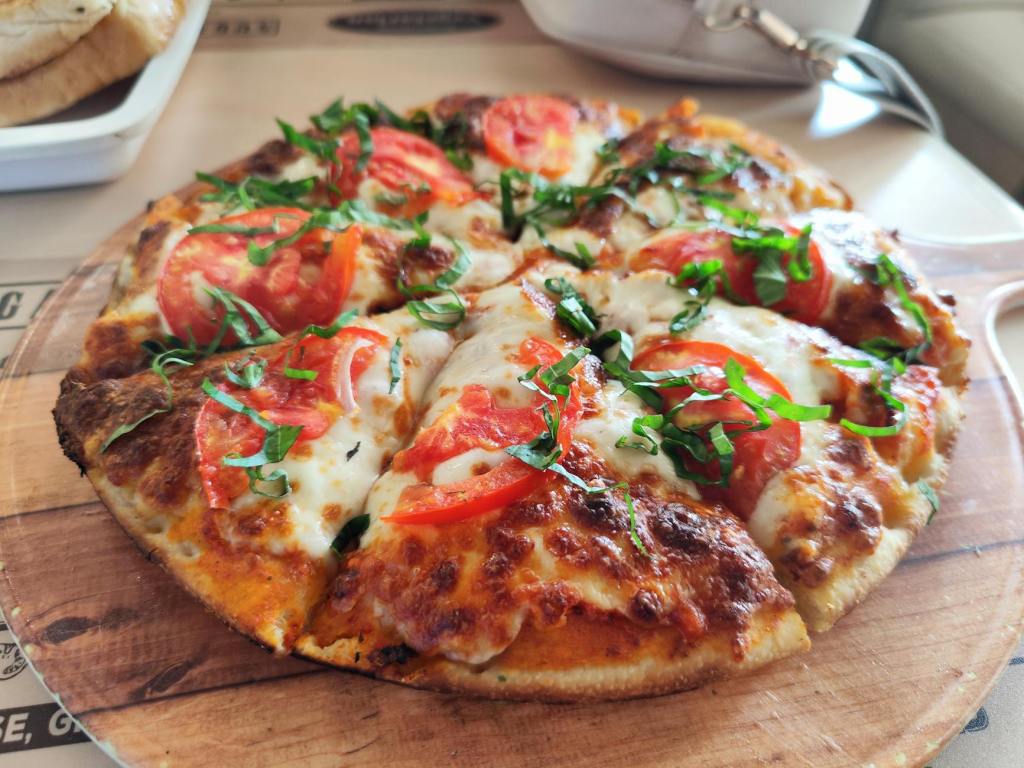
Pizza gets a bad rep. All too often, it is demonised as a greasy late-night fix, or a comforting, yet guilty pleasure, reserved only for the occasional treat.
Its easy to see why this is the case, with a large Meateor from Domino’s packing in a mega 2739 calories, and 70.4g of saturated fat – more than double the recommended intake of saturates for an average man. Of course, this is before adding extra cheese, and a stuffed crust which takes the total to 3658 calories! Obviously, individual calorie needs will impact just how wild of a choice this is, yet for most people it’s a fairly significant undertaking. What’s more, Domino’s suggest the pizza serves 3-4, but who’s actually sharing?
In truth, pizza doesn’t have to be ‘unhealthy’. Whilst takeaways can be incredibly high in fat and calories, at its heart, pizza is just carbohydrates, fat and protein, with a spattering of antioxidant-rich tomato. The classic Margherita might lack a little protein, fibre, and a few other vitamins, but this is a problem easily resolved. In fact, pizza can be a vessel for a wealth of healthful ingredients, you just have to embrace a little creativity.
Building a base…
If you are embracing your inner domestic god or goddess, then a pizza making night can be pretty good fun, particularly with kids. What’s more, it allows you to personalise the ingredients, adding more or less of your favourites, catering to dietary requirements, and boosting the nutritional value.
For a traditional base, all you actually need is yeast, flour, water and a little salt, and you can blend the ingredients by hand or with a mixer. Resting the dough for around two hours, however, requires both time and patience, and The time-consuming part, however, comes when you have to rest the dough for around 2 hours, and stretching and rolling it can be more than a little messy.
Alternatively, it’s possible to make a base from wholemeal flour and Greek yogurt, which boosts the protein and fibre content of a standard dough, and only demands a minute of kneading, and no proving time, not to mention there being no concern about additives.
The particularly ambitious (or carb-conscious) among us may even attempt a cottage cheese base. Apparently, with 225g of cottage cheese, 125g of flour, a spot of olive oil, and a tsp each of baking powder and salt, you can create a dough with 37g of protein! However, from what I’ve gathered, it resembles more of an omelette than a doughy delight, so is it really worth the sacrifice?
‘Ready-to-roll’ doughs can bridge the gap between home cooking and home-delivery. The brand Northern Dough, for example, retail pre-portioned, frozen balls of pizza dough, which can be defrosted and rolled whenever pizza is calling (providing it calls the night before so you have adequate time to thaw it in the fridge). It’s priced at £2.60 per pack – so £1.30 per 12 inch base – and a serving of their wholemeal dough contains 424 calories, 13.2g of fibre, and 24.6g of protein. They even have a high protein version, with 558 calories and 36.3g of protein. The ingredients are all natural and recognisable, and you gain the fun of topping your pie, without the faff.
All this said, the easiest way to go homemade is by using shop-bought wraps, pittas, or naans. They may be smaller, thinner and have a slightly different flavour to an ‘actual’ pizza base, but as far as simplicity is concerned, they’re pretty optimal. Two plain, sourdough pizza bases from Sainsbury’s are priced at £1.50, and each contain around 426 calories, 12.8g of protein, and 3.2g of fibre. A six pack of wholemeal pittas, on the other hand, costs just 50p (or 8p each). One bread offers 135 calories, 5.8g of protein and 5.4g of fibre, and though they are smaller, you could always have three, which would deliver more protein and fibre than the original base. Interestingly, three pittas would also contain around 4.3g less fat, as they don’t have rapeseed oil added to them.
Base established, it’s time for tomato. Not only is making a tomato sauce from scratch child’s-play, but tinned tomatoes are exceptionally high in vitamins C, E, and K, potassium, and, lycopene, a potent antioxidant and anti-inflammatory compound, which work together to support immune function and bone health. Simply mashing and heating a tin of chopped tomatoes with some oregano or basil, salt, pepper and perhaps a little onion and garlic, makes a marinara of dreams. Alternatively, a couple of tablespoons of tomato purée serves as an equally simple topping, and jarred sauces like Loyd Grossman’s ‘No Added Sugar Pizza Sauce’, aren’t all that terrible either.
Sourdough supremacy?
Sourdough has a reputation as being somewhat of a post-pandemic hype, but in reality, its origins date back thousands of years. Put simply, sourdough is just bread made without commercial yeast. It begins with a started of flour and water, which naturally contains wild yeast and bacteria. This is then kept in a warm place, and fed with more flour and tepid water, until it forms bubbles on its surface and a slightly sour aroma – indicating it is ‘ripe’. From here, a little of the starter is used to make a levain, which is left to mature further, then combined with more flour and water to make the dough.
As the starter ferments, carbon dioxide and ethanol are produced, which get trapped in the gluten network of the dough, allowing it to rise and form an irresistibly bubbly texture when baked. In addition to this, we get lactic acid, which gives the bread its tangy flavour, and keeps any pathogens at bay.
For a number of reasons, sourdough can be much gentler on the gut than ‘normal’ bread or dough. The fermentation process means that fructans – which cause bloating in many IBS sufferers – and a fair amount of the gluten in the flour are already broken down. The bacteria in the wild yeast also digest some of the carbohydrates in the flour, turning them into organic acids which make it slower for us to digest, and lower the pH of the bread. As a result, it is considered ‘low GI’, hence eating sourdough may result in a steady release of energy, rather than a blood sugar spike.
To top it all off, this mystical brewing process makes certain phenolic compounds, sterols, vitamins, and minerals more bioavailable. The presence of lactic acid reduces the levels of phytic acid in the dough (which can prevent nutrient absorption) and the fibre in the flour becomes more soluble, so we literally get more bang for our nutritional buck.
Back in 18th century Naples, this was the only way to create pizza, as commercial yeast simply didn’t exist, and some Italian starters have been around ever since. Health benefits aside, natural fermentation leads to a chewy dough, yet a crisp crust, and a distinctive complexity of flavour.
Crafting your own sourdough can be a labour of love, and though it is a rewarding endeavour, most of us don’t have the brain capacity to remember to feed our pet starter twice a day. Thankfully, restaurants like Franco Manca and Pizza Pilgrims use sourdough as standard, and its possible to get pre-made bases from online artisan retailers, and from supermarket brands like Costa & Mollica.
Whilst I’ve made a base suggestion for each of the recipes below, there si nothing stopping you from mixing it up, and using whatever you have on hand, or whatever suits your time constraints or nutritional goals!
1.1 Inverted Milanese (Crosta & Mollica Ready to Top Pizza Base with Tomato Sauce)
The classic chicken Milanese features breaded chicken cutlets, coated in parmesan, and fried until crisp. This pizza boasts the same unquestionably delicious flavours, but the pizza base replaces the breadcrumbs, and rather than frying the chicken, we poach it, then add it to a tomato base with fresh cherry tomatoes, sliced mushrooms, and grated parmesan, before finishing it off with some rocket or arugula, for extra greenery and peppery bite.
When it comes to cheese, there are plenty of advantages on offer. Few of us would be surprised to hear that it is an excellent source of calcium, vitamin D, phosphorus, and vitamin K2, so contributes to the maintenance and repair of strong bones and teeth. Mozzarella, as the original choice, is lower in salt than lots of other cheeses, and 30g of your standard grated mozz offers around 6g of protein. Swap this out for a ‘protein’ cheese (like Eatlean), and you gain an additional 5g or so, for around half of the calories. If authenticity is your thing, a Mozzarella ball torn into chunks may deliver the genuine Italian look you’re after, and these are available in ‘lighter’ versions too, but there is more to life than mozz…
Pizza preferences don’t just vary across countries, but within Italy too. The Sicilians, for example, often use caciocavallo, or pecorino Romano on a focaccia style base. Aside from nutty depth and complexity, pecorino – and similar hard, aged cheeses like parmesan, are particularly nutrient dense. Just 30g offers 9.6g of protein, and acts as a probiotic thanks to the live bacteria it contains. These beneficial bugs can survive digestive processes, and therefore enrich the gut microbiome. Additionally, parmesan is naturally lactose free, so ideal for those who have an intolerance. It’s important to note that traditional parmesan isn’t vegetarian, as it is made with animal rennet, but most supermarkets retail ‘Italian-Style hard cheeses’ which don’t retain the DOP identity of parmesan or pecorino, but largely taste the same and are manufactured using microbial or thistle rennet.
For ultimate convenience, you could use pre-cooked chicken breast fillets for this reciped, but interestingly, even the plainest looking ‘ready-to-eat’ chicken we buy from supermarkets can have a a number of weird and wonderful ingredients added to it. Anything labelled as ‘wafer thin’, or described as ‘reformed’ is likely to be pretty heavily processed, and can contain substances like sodium metabisulphite, sodium triphosphate and dextrose, which are used to enhance colour, flavour and shelf-life. Even though chicken is lower in saturated fat than classic pizza toppings like pepperoni, consumption of ultra-processed meats is associated with poor health outcomes, so it might be worth taking a glance at the back of the pack before you buy.
The best bet for a pre-cooked poultry seems to be M&S’s ‘Skinless British Chicken Fillet’, which is purely chicken breast cooked in lemon juice, sea salt, and chicken stock. But cooking chicken at home offers much more cluck for your buck, eliminating any additives, and offering better value for money. Poaching is not only efficient, but doesn’t require any fat, and keeps the meat tender.
That single 125g fillet from M&S would cost you £3.25, and provide 36g of protein, whereas two raw chicken breast fillets from the same online retailer are priced at £2.86, and deliver 80g of protein in total. One breast is more than enough for a pizza, so you could even use the other for a second meal.
Begin by placing the chicken breast in a large pot on the hob, then covering with at least and inch of water or stock. Bring to a boil, then reduce the heat, and allow to simmer until cooked through. As a rule, this should take 10-15 minutes*, but this depends on the size. Remove the chicken from the liquid, then allow it to rest for a couple of minutes before shredding it into small pieces.
Mix 100g of greek yogurt with a crushed garlic clove, the juice of one lemon, and 10g of parmesan, before spreading it over the tomato base. This will add a little creaminess that parmesan can lack. Scatter over the shredded chicken, then add the sliced cherry tomatoes and mushrooms. Evenly grate over another 40g of parmesan, and toss over a bit of dried oregano for good measure. Pop in the oven at 190 degrees fan for around 10 minutes, or until the cheese is starting to go crispy. Finish it off with a handful of rocket or arugula.
The fact that the cheese goes brown is a result of a scientific phenomenon known as the Maillard Reaction – aka ‘why brown food tastes good’. This is a complicated chemical process where the amino acids and sugars in foods become transformed by heat. Melanoidins are produced, which colour the food, along with various other compounds which alter the taste and aroma. The flour in pizza bases contains amino acids and sugar, which is why we get a crust, and bubbles of charred dough after cooking, and the lactose and proteins in cheese react to make that nutty smell, and gorgeous colour.
Over time, we have evolved to find cooked food both safer to eat, and more palatable, so the taste and smell of that bubbling pizza tells our brain it’s going to provide essential nutrition, and also not cause us any harm.
The whole pizza amounts to approximately 1034 calories, and 78g of protein. Undoubtedly, this is a substantial amount of energy, yet in comparison to a takeaway pizza, there is no shortage of fibre, vitamins, or lean protein.
*The chicken is done when there is not pink meat, or the juices run clear when it is pierced. Once cooled, it will keep covered in the fridge for up to three days.
1.2 Inverted Milanese – Vegan style
If you’re after a vegan alternative to this, there is nothing stopping you from replacing the chicken with tofu or chickpeas, and using a plant-based alternative to parmesan. In fact, it’s surprisingly easy to make a vegan hard cheese from scratch, simply by blitzing 150g of cashews, a little garlic powder, and 4 tbsp of nutritional yeast in a food processor.
2. The mould monster (Northern Dough Co Wholemeal Frozen Pizza Dough)
This gloriously colourful pie is nothing short of a party for your tastebuds; a wholemeal dough offers depth of flavour, and balsamic vinegar adds bite to the tomatoes, squash, and onions, uniting them under an umbrella of tang. Velvety, yet pungent gorgonzola satisfies the need for cheese, while pumpkin seeds and honey provide a little je ne sais quoi.
Begin by taking 100g of frozen butternut squash chunks, and adding them to a roasting tin lined with parchment paper, along with one large sliced red onion. Drizzle over a couple of tablespoons of balsamic vinegar and some salt and pepper. Roast at 180 degrees for around 30 minutes.
Meanwhile, make your balsamic tomato sauce by combining 100mls of passata, a tablespoon of mixed Italian herbs, a crushed garlic clove, plenty of salt and pepper, and a tablespoon of balsamic vinegar.*
Having defrosted the ball of dough according to pack instructions, you can roll it out on a lightly floured surface, into whatever shape takes your fancy, then spread over ample tomato sauce. When the squash and onions are tender, scatter them on the base, before crumbling over around 60g of gorgonzola. Finish it off with 10g of pumpkin seeds, before whacking to oven up to 200 degrees fan, and cooking for 8-10 minutes. For a final flourish, drizzle over some honey.
Not only does this combo come with a certain sense of refinement, but a distinct aura of health too…
Blue cheese is an unsung gut health hero, as the Penicillium roqueforti cultures which create it’s distinctive veins can withstand the effect of stomach acid, and reach the gut intact, therefore helping the body fight off infections. Not only this, but it delivers zinc, selenium, and B vitamins that reinforce the body’s natural defences even further. Gorgonzola, which comes from the Lombardy region of Italy, is delicate and buttery, so contrasts the tartness of the vinegar beautifully. Yes, cheese contains saturated fat; 60g of Gorgonzola contains around 11.4g. nevertheless, the government recommend we consume no more than 20g-30g per day, so cheese can still form a part of a ‘balanced’ diet.
Butternut squash contains a multitude of vitamins, potassium, magnesium and carotenoids – which give it its colour and act as antioxidants, thus reduce chronic disease risk. It adds fibre to the pizza, and can have a positive effect on eye health, immunity and skin helath. Of course, there is nothing stopping you from preparing fresh squash, yet buying frozen chunks avoids the faff of cutting it up, and means there is no wastage. What’s more, frozen veg has the potential to be just as nutritious, if not more so, than fresh, as it is harvested in its ripest and most vitamin-packed state.
Humble onions and garlic are often overshadowed by more elaborate plants, but the alliums are credited with a vast array of potential benefits. They’re loaded with around 25 different kinds of flavonoids, which can help protect against chronic conditions such as cancer, and reduce inflammation. Throughout history, onions have been though to protect against evil spirits, improve strength and stamina in ancient greek athletes and protect against colds when kept in socks… Unfortunately, putting an onion anywhere near your feet won’t cure the flu, but they do have anti-bacterial an antiviral properties that are effective against pathogens such as E.coli.
Furthermore, the compound quercitin, is renowned for its heart health effects, yet it also inhibits the release of histamine, a chemical that triggers allergic reactions and airway constriction, so some people find onions can ease the respiratory discomfort experienced with colds and asthma. What’s more, the red onion on the pizza has twice as much quercetin as a white one would. Finally, onions contain ample non-digestible fibre, which provide fuel for the bacteria in our gut, supporting immunity and digestion as a result. It must be noted, however, that for IBS sufferers, this can prove a little problematic.
We might not think as balsamic vinegar as a health food, simply viewing it as a condiment, yet it is another source of polyphenols that can help block certain toxic cells that raise cholesterol levels. As it is derived from grapes, it contains compounds that may prevent platelets from aggregating, reducing the risk of cardiovascular disease, and can contribute to a clearer and brighter too.
Anyone who has eaten a good hot dog will know that onions become delightfully sweet as we cook them. This is because, the heat breaks down complex carbohydrates into sugars, whilst simultaneously causing water to evaporate and reducing the sulphur compounds which lead to the pungent flavour we know and love. The net effect is much more concentrated sugars, and a darkened colour thanks to the Maillard reaction.
Adding balsamic to the equation exacerbates this process, resulting in an umami sweetness we can’t resist.
Classic pizza toppings are often high in saturated fats, but do not feature many of the mono- and polyunsaturated fats (specifically omega-3 and omega-6) crucial to overall wellness, and brain health in particular. Thankfully, pumpkin seeds not only boost the protein content of the pizza by 3-4g, but are rich in healthy fats, magnesium, zinc, copper and iron, which support brain structure, relaxation, focus and memory. Some research implies that they may play a role in Alzheimers prevention, and they boast a high concentration of the amino acid tryptophan, which the body converts into serotonin and melatonin to improve sleep quality.
Finally, honey is not just a natural sweetener, but is another prebiotic, and has antibacterial and immune boosting properties. Anecdotal evidence also suggests that consuming local, unpasteurised honey, which contains local flower pollen, acts like immunotherapy by exposing the body to small amounts of allergens, so can ease hay fever symptoms.
The gorgonzola is the star here, but this pizza also excels in terms of ‘plant points’. Consuming a wide range of fruits, vegetables, herbs, and legumes helps cultivate a diverse gut microbiome. This has been linked to improved immunity, heart disease prevention and even better mental health (amongst other things), therefore the lates government and nutritionist recommendation is that we attempt to eat 30 different types of plant food each week. Seeds, herbs, spices and legumes all count, so in just one meal you have a solid six – not bad for junk food.
3. Vegan vibes (Mediterranean tofu on a sun-dried tomato hummus base)
For vegans, cheese can pose somewhat of a problem… Nevertheless, things have come a long way since veganism first arose as a concept. Some varieties can be very heavily processed, and lacking in protein and nutrients (not to mention tasting nothing like cheese). Many ‘cheezes’ use coconut oil combined with xanthan gum and starch to create a cheese-like texture, and are fortified with B12 and calcium. Yet, in addition to having more additives than dairy cheeses, they have a very different ratio macronutrients…
A standard grated mozzarella contains around 5g of carbs, 22g of protein, and 20g of fat per 100g (thought these values will vary slightly between brands and), whereas Violife’s vegan alternative to mozzarella has 21g of carbs, just 0.1g of protein and 24g of fat in the same amount. So, nutritionally, it’s more of a carbohydrate than a protein, with 28% of the total calories coming from carbs, and only 0.13% coming from protein, meaning it’s composition barely resembles ‘real’ cheese at all.
Tofu or nut based cheezes tend to have dietary profiles more akin to what one would expect from a cheese, but they can be more expensive, and harder to find. The artisan brand ‘I am nut ok’, produce a whole range of plant-based solutions, utilising herbs, spices and ageing processes to cultivate more authentic flavour. Their grated Italian cheese alternative – comparable to parmesan – only contains five ingredients (Cashew nuts, nutritional yeast, sea salt, garlic powder and truffle oil), and has a more respectable 20g of protein per 100g.
If you’re not fussed about the ‘melt’ then nutritional yeast flakes on their own are potentially the healthiest way of achieving a cheesy flavour. Not to be confused with bread yeast, this vegan staple is produced by growing a fungus called saccharomyces cerevisiae on molasses, then deactivating it with heat, resulting in flakes with a rich umami taste. It is then often fortified with B12, zinc, and folic acid and packs in an impressive 51g of protein for every 100g.
Most pizza bases are vegan friendly, but for the sake of saving time, this recipe uses a Deli Kitchen Persian Flatbread, which (despite being rectangular) is doughy enough to feel like pizza. Where things get a little wackier, however, is with the base sauce. Instead of a marinara, it uses a sun-dried tomato hummus. You could make it from scratch, but simply blending 50g of jarred sun-dried tomatoes and 100g of shop-bought hummus in a food processor works equally well. (You could even just finely chop the tomatoes and stir them in). Spread the hummus evenly over the flatbread.
Next, take 100g of smoked tofu and crumble it into a bowl. Add 1tsp of garlic powder, 1 tbsp nutritional yeast, 1tsp of smoked paprika and 1tsp of oregano. Mix it all together, then scatter it over the hummus along with around100g of finely chopped tenderstem broccoli. As a cruciferous vegetable, this has plenty of vitamin K, and chemicals called indoles and isothiocyanates, which preliminary research suggest may inhibit the development of cancer in several organs. Top it off with 50g of folate-packed jarred artichoke hearts, 30g of sliced black olives, 10g of hemp seeds, and a final tbsp of nutritional yeast. Bake for 8-10 minutes at 200 degrees fan, et voila.
Its perfectly possible to obtain all the necessary nutrients from a vegan diet, and getting ample fibre and plant diversity generally isn’t a problem. This being said, eliminating animal products means vegans have to be a little more conscious of their protein intake, and ensure they incorporate foods with vitamin B12, iron, folate, vitamin D, iron and zinc. Thankfully, a well-planned pizza can offer the majority of these.
Starting from the base, people often overlook the fact that bread is not purely carbohydrate. The flatbreads offer 10.5g of protein, and are made with flour fortified with calcium, niacin, iron and thiamin.
Hummus is not only gorgeously creamy, but a brilliant source of plant-based protein, fibre and healthy fats. ‘Low-fat’ hummus is lower in calories, yet the original versions contain higher levels of mono and polyunsaturated fats, which the body can’t produce on it’s own. Whether you’re a vegan or not, these are essential for maintaining cardiovascular health, supporting brain and nerve function, improving insulin sensitivity, and reducing chronic inflammation. 100g of hummus makes for an easy 6g of protein and 4g of fibre, along with some iron, folate, magnesium and potassium. Sun-dried tomatoes are dehydrated, therefore, compared to fresh toms, they have a higher concentration of vitamin C, antioxidants like lycopene (linked to lower cancer risk) and lutein and zeaxanthin, which are vital for eye health.
Nutritional yeast is a vegan staple for good reason, thanks to it’s vitamin B12 content.Vital for producing red blood cells, maintaining the myelin sheath around nerves,
B12 is vital for producing red blood cells, maintaining healthy never function, preventing cognitive decline and even sustaining a stable mood, B12 is predominantly found in fish, meat, poultry and dairy. 5g of nutritional yeast, however, packs in about 2.2 micrograms; a solid chunk of the 2.4 microgram recommended daily intake.
Tofu is a nutritional powerhouse for vegans and non-vegans alike. It’s an incredibly versatile foodstuff, hailing from China over 1000 years ago, and offering a wealth of isoflavones, unsaturated fats which can help lower LDL cholesterol, alongside manganese, copper, selenium, iron and phosphorus. 100g of smoked tofu contains about 16g of protein 2.19mg of iron and 56.5mg calcium – what’s not to like!
The blend of spices in the tofu doesn’t just add flavour but bolsters the tofu with benefits too. As we know, garlic offers antiviral and antibacterial properties, and oregano provides vitamin C which aids iron absorption, and minerals like zinc that can improve immunity and metabolic function. Paprika is rich in carotenoids which fight free radicals and reduce chronic disease risk by combatting oxidative stress, as well as vitamins E, B6 and A, the latter of which supports the eyes and skin.
Olives are a source of polyphenols, and oleic acid, which is a potent anti-inflammatory, and hemp seeds are what’s known as a ‘complete protein’, so contain all nine essential amino acids needed for muscle repair and immune function. (This is also the case for tofu.) They have an impressive fatty acid profile, with just 20g offering a similar amount of omega 3 to 100g of salmon, and all of the daily recommended intake alpha-linolenic acid (ALA). ALA is critical to brain and heart health, and is known to decrease cardiovascular disease risk, lower blood pressure and inflammation, and protect the brain against stroke and cognitive decline. What makes these tiny seeds even more special is the fact that they contain a 3:1 or 2:1 ratio of omega-6 to omega-3, which is considered ideal for minimising inflammation.
Whilst hemp seeds are most commonly used in smoothies, on salads, and as a yogurt topper, they add a little extra texture and a subtle nuttiness to pizza which works charmingly.
If nothing else, this pizza is proof that a vegan diet does not have to mean missing out on pizza, or protein. It boasts around 47g of the stuff, along with tonnes of fibre and healthy fats, leaving you satiated and nourished! The best part? There’s no plastic cheeze in sight.
4. It’s all Greek to me
Aubergine, butterbeans and feta bring the aegean sunshine to Southhampton (or any other part of British suburbia) with this mediterranean hybrid. Obviously, pittas or flatbreads would work well as a base, but the pre-sauced Crosta & Mollica base shines once again for its convenience and sourdough tang.
Inspired by the flavours of Greek salad, moussaka and gigantes plaki – a dish of tomato baked butterbeans – there is no need for meat to make this tasty, nevertheless, if you do fancy it, lemony chicken breast would work well.
Begin by slicing 100g of aubergine and one small red onion into slithers, and draining a can of butterbeans.* Place half the can’s contents in an airtight container, and store them in the fridge for up to two days*. Add the the veggies and beans to a parchment lined roasting tin with 1tbsp oregano, one crushed garlic clove, 1tbsp of capers, a dash of vinegar, salt, pepper, and a little spray oil or olive oil. Roast at 200 decrees fan for 20 minutes, until the onions are starting to brown, and the butterbeans are starting to pop in their skins a little. (You could also use an air fryer here if you prefer).
Now, adorn the base with the butterbeans and veg, before crumbling over 100g of reduced fat feta (this may be labelled as ‘greek style salad cheese’). Bake for 10-12 minutes until the feta is brown and oozy, and has started to seal in the rest of the toppings. Garnish with an extra dash of oregano, and enjoy!
It’s not just cows that make great cheese, and feta, as a blend of sheep and goat milk, is a source of probotics, and can be easier to digest than cow’s cheeses. It goes without saying that you could use full-fat feta here, but in all honesty, the lower fat version tastes pretty good on pizza, and retains many of the same benefits, such as containing vitamins B2, B6 and B12. Aubergines, which are technically a fruit thanks to the fact that they grow from a flowering plant and contain seeds, take centre stage in many Greek recipes. Their alluring purple colour comes from an antioxidant called nasunin, which has been shown to protect brain cells from free radicals. They’re often regaled as a ‘blank canvas’ for flavour, high in the minerals copper, magnesium and manganese, the latter of which supports bone density and development, and the formation of connective tissue, cartilage, and collagen, along with aiding in wound healing.
Beans and pulses are some of the most affordable protein sources on the market, with a can generally available for under £1. Dried beans are even more economical, but take a little more effort to cook, whilst jarred varieties from brands like ‘Bold Bean Co’ have a more premium price tag. Gigantes Plaki puts butterbeans in the limelight, baking them in a sauce of tomatoes, olive oil, cinnamon, oregano until fragrant and then serving the casserole-like dish with feta and bread, or as part of a mezze. Irregardless of their velvety texture, butterbeans are fantastically fibre-rich (with around 8g in half a can), and offer a multitude of B vitamins – specifically thiamine, riboflavin, and folate – which we need to turn carbohydrates into energy.
Considering their diminutive size, capers contain an abundance of antioxidants, and were used in Ayurvedic medicine to promote healthy liver function, and, quite frankly, no ionian plate feels complete without a spattering of these green umami bullets.
It might be said that one of the things a nutritionist would disapprove of when it comes to pizza, is the lack of fibre; this pizza puts that claim to shame. In total, you get just over 20g of the stuff here, two thirds of the daily recommended dose. This figure becomes even more impressive if you exchange the Crosta and Mollica base for three wholegrain pittas, and half a can of chopped tomatoes tops this up to an almighty 30g! Not bad considering a pre-made ‘Crosta & Mollica Vegana Sourdough Pizza with Grilled Vegetables’ has just 12g.
*These can be used in a salad, crushed into a hummus-style sandwich filling with onion and herbs, or mixed into a pasta sauce for a protein boost.
4. Rainbow Chicken or (Chick’n)
They say we should eat the rainbow, and this pizza definitely fulfils that requirement, without sacrificing any flavour or fun. Two seeded tortilla wraps (or one for a smaller appetite) make for a super easy base, and whack up the fibre content too, whilst a cream cheese base gives it a hint of silky freshness.
For the base sauce, combine 90g of light cream cheese with the juice of one lemon, a finely diced shallot, 20mls of white vinegar, and 1tbsp oregano. You can whip these together with a fork, or use a food processor for a smoother texture. Spread the cheese over the wraps, then cut 100g of sliced cooked chicken breast or Quorn vegan chicken slices into smaller pieces, laying them over the cream cheese base. Next, finely slice 100g of jarred red peppers and 100g of pickled beetroot, before adding them to the display along with 80g of defrosted frozen peas.
Take 60g of light mozzarella and a few fresh basil leaves and scatter them over the wraps, then pop them in the oven for 5-10 minutes at 180 degrees fan, until the cheese has melted.
Meanwhile, in a small bowl combine 150g of natural yogurt (or a vegan alternative) with another tbsp of oregano, 1 tbsp nutritional yeast, a little lemon zest, and 1tbsp of soy sauce, along with a pinch of salt and plenty of black pepper. Drizzle this over the pizzas, for a tangy dressing that pulls everything together.
As bases go, wraps might not be as thick and spongy as their peers, but if you’re a fan of a ‘thin and crispy’ style pizza, then they make for a rapid solution to your cravings. Not only this, but for those who are unable to eat gluten, wraps are generally the least cardboard-esque free-from bread product. A pack of eight seeded tortillas can cost as little as 99p from Aldi, and even branded versions like Fitzgerald’s are rarely more than £2, making them cheaper than most pre-made pizza bases, and opting for seeded means you’re looking at 4.5g of fibre, and 6g of protein per wrap, along with a spattering of healthy fats, vitamins and minerals. All of this will help keep you fuller for longer, and two wraps contains around 360 calories, compared to the 670 in a single M&S Wood-fired base, as an example. If a tomato base is more your style then there is no harm in ditching the cream cheese alternatie, but it does top up the protein content by just under 10g, and can be easily substituted for plant-based cheese spread if necessary. We know nutritional yeast adds those all-too-important B vitamins, and shallots possess much of the same benefits as onions, but are a little milder on the palate.
Jarred red peppers are vibrant and slightly smoky, and as they’re often roasted, they have an increased concentration of some nutrients and antioxidants like beta-carotene, lutein, and zeaxanthin. Furthermore, they yield an impressive amount of vitamin C, often 50mg per 100g, which is approximately the same as in 100g of orange! This makes them an immunity powerhouse, particularly when combined with the lemon juice and zest.
If you’re using chicken, then grilling, baking or poaching would likely be a more affordable and minimally processed option, particularly if you batch cook for multiple meals. Nevertheless, cooked chicken breast slices or fillets are always good when you’re short on time, and Quorn slices, albeit fairly heavily processed, are a complete protein, and a convenient option for non-meat eaters.
Beetroot is not just an aesthetic addition, but a gloriously healthful one too. Every 100g of beetroot contains around 120mg of betalain, which gives the vegetables their vibrant hue. This pigment acts as a powerful antioxidant with anti-inflammatory, anticancer, and cardio-protective effects. Alongside this, consuming beetroot may alter the way in which we absorb carbohydrates, as the high levels of fibre slow digestion and prevent blood sugar spikes, and the 250-400mg of nitrates it offers are converted into nitric oxide in the body, which helps to dilate blood vessels and improve blood flow, leading to better glucose uptake by the cells. The dilatory effect of the nitrates is also associated with improved athletic performance, lower blood pressure and heightened cognitive function. Finally, beetroot on pizza shows your microbiome a little extra love too, as the soluble and insoluble fibre helps prevent constipation, the betalains reduce intestinal inflammation, and glutamic acid is vital to maintaining the gut lining. Naturally fermented beetroot in particular provides probiotics which feed the gut bacteria too, but this is a little harder to get hold of than vinegar-pickled beets.
In my humble opinion, peas are one of the most underrated veggies we have, they’re bright, an absolute bargain, and just 80g contains over 4g of protein. Not only this, but they’re packed with a host of vitamins, and are delightfully sweet. Even basil leaves offer more than merely panache, with some studies suggesting they can aid in the reduction of bloating, and reduce stress.
Using a light mozzarella ball (rather than grated) is decidedly prettier, it melts into authentic-looking blobs of dairy delight. The reduced-fat version leaves you with more of the calories coming from protein,(around 11% rather than 6.4%) and pretty much halves the amount of saturated fat involved.
Finally, the natural yogurt drizzle boosts the protein content further, and ties the meal together, whilst also adding extra bone and tooth strengthening calcium, and live and active cultures which your digestive system will love.
If you were to opt for a takeaway, perhaps the most similar pizza to the above combination would be a Domino’s ‘Chicken Feast’, which features chicken strips, mushrooms and sweetcorn. A medium, thin and crispy base with reduced fat mozzarella would total 1056 calories, 28g of fat, 11g of fibre and 64g of protein. In fairness, this is quite reasonable compared to many of Domino’s heavier options, but our wrap-based solution, at approximately 900 calories for the two, caters for over 75g of protein, and the wraps and peas alone offer more than 13g of fibre!
5. Asian-tuna supreme
Tinned fish has a tendency to split opinions. Some people love it, others smell sardines and mackerel in their nightmares. Like it or not, the government recommends we consume two portions of fish each week, and canned varieties offer an affordable and way of hitting this goal.
Fish on pizza is nothing new; ’tonnata’ is a classic across the Med, and features a simple combination of tomato, tuna, onion and mozzarella, and anchovies are often paired with briny olives and Parmesan.
Whilst a little different to the traditional Piedmont recipes, this Asian-inspired tuna pizza offers ample nourishment for your gut, brain and body. For the base, combine 120g of wholemeal flour with 150g of fat-free Greek yogurt, a pinch of salt, 5g of baking powder, and 1/2tsp of sesame oil in a large bowl. Start off by stirring with a spoon, until the mix looks crumbly, then go in with your hands to form a dough.
Dust a clean work-surface with a little more flour, then knead the dough for a minute. Once the outer surface of your dough-ball is smooth, fold in 10g of sesame seeds, before rolling it out to your desired thickness.*
Once you’ve got your base, drain a can 145g can of tuna in spring water, then mix it with another 50g of the Greek yogurt, a tsp of soy sauce, a pinch of chilli flakes, 1 tsp of miso paste, and one finely sliced spring onion. Spread the mix over the base, then top with 80g of edamame beans (you can buy these frozen and defrost in the microwave), 80g of defrosted frozen sweetcorn, and 100g of shiitake mushrooms. Finish it off with a crushed packet of seaweed thins, and 30g of reduced-fat cheddar cheese.
Cook in a preheated at 180 degrees fan for 10-12 minutes, then scatter over 50g of pink pickled onions, and a little more soy sauce if you like.
There’s nothing stopping you using a shop-bought base, as making your own base is certainly more of a labour intensive endeavour. This being said, if you have the time, then it can be a fun and rewarding activity, and offers you some autonomy when it comes to the shape and thickness of the end result. Not only does the wholemeal flour add around 6g of fibre, but a delicately nutty flavour which complements the asian vibe. Of course, if you have an allergy, then the sesame seeds could be omitted, and the sesame oil swapped for olive oil, but there is no doubt that this seed is a great source of unsaturated fat, and serve to enhance the Asian theme. Of course, Greek yogurt adds protein, calcium and probiotics to the base, so even before toppings, you’ve got an impeccable 36g of muscle-building magic here.
The star of the show, tuna, is a prolific source of omega-3 fatty acids eicosapentaenoic acid (EPA) and docosahexaenoic acid (DHA). Fresh tuna actually contains more of these fats than salmon, (1,600mg per 100g compared to 1,500mg per 100g), but this level falls to around 250mg per 100g in canned tuna. Irregardless, it’s still makes a significant dent in the daily recommendation of 450mg per day, and also contains vitamin D, iron, selenium and phosphorus. If you wanted to, you could use tinned salmon in this recipe instead, but it is generally a bit more expensive than tuna.
Considering that a multipack of 145g tins of tuna in water from Tesco costs just £2.49, there is no doubt that it offers a pretty stellar amount of protein for your cash, with each can packing in just over 25g, as well as B vitamins which support the nervous system and skin.
Albeit it they don’t have quite the same nutritional benefits as tuna, chickpeas could also be smashed up and mixed with the seasonings and yogurt for a plant-based option which also relies on cupboard staples.
Miso paste – a Japanese seasoning made from fermented soybeans – adds a distinct umami flavour, but it’s also surprisingly rich in antioxidants, isoflavanes and live bacteria which nourish the gut flora. Edamame beans and sweetcorn offer vibrancy and an extra 14g of protein, and making your own pizza, rather than ordering one with veggies on, means you get the full 80g portion, so can class them as one of your 5-a-day. If you can’t get hold of shiitake mushrooms, then any other variety will work just fine, yet this particular variety are known for their potential heart health benefits, as they contain eritadenine and beta-glucans, which can help lower cholesterol levels. Additionally, they boast more fibre, zinc and B vitamins than white mushrooms, and polysaccharides including lentinan, which could possibly help fight tumours. Their almost smoky flavour and meaty texture gives the pizza even more substance, and about 4g of fibre as well.
Another superfood which is far more popular in Asian cuisine that our own, is seaweed. In Japan, where life expectancy is higher than anywhere else in the world, nori is used to wrap sushi, kombu is often added to soups and broths, and wakame salads make frequent menu appearances. A 5g packet of dried nori snacks contains 92 micrograms of iodine (66% of the RDI), which the body uses to make thyroid hormones that regulate metabolism. Too little of this mineral can cause hypothyroidism, and subsequent tiredness, weight gain, and low mood, therefore adequate intake is vital, and seaweed is one of best plant-based sources. On top of this, it acts as a prebiotic, and offers tyrosine which may enhance cognitive performance, whilst giving the pizza a little extra umami depth.
Pink pickled onions are undeniably beautiful, as well as being sharp, sweet and delicately spicy. We know onions are antioxidant powerhouses, and the acetic acid in the pickling vinegar can sometimes help reduce blood sugar spikes after meals. Finally, a spattering of reduced-fat cheddar brings things back to the pizza roots, whilst topping you up to 31% of the daily recommended calcium intake.
So, with a plethora of veggies, protein, pre and probiotics, this pizza is the epitome of health. In total, it contains around 1135 calories, which certainly constitutes a substantial meal, but it also serves up at least 40g of fibre, ample amounts of lean protein, and hardly any saturated fat.
*If your struggling with the stickiness, then add a tablespoon of flour at a time, or if you find the dough is too dry, then add a drop of water.
Getting Dippy with It
Whether you keep it simple with ketchup, mayo or bbq, or opt for something a little more extravagant, no pizza feast is complete without a dip. Gone are the days of abandoning dry crusts at the side of your plate when most pizza chains offer a whole menu of saucy accompaniments. Unfortunately, these delectable accessories can be exceedingly calorie dense. Once again, for the occasional all-out Italian extravaganza, this isn’t too much of an issue, but for more regular crust-dunking, whipping up a lighter option might be wise.
Inevitably, there’s variation depending on your preference. Creamy garlic vibes tend to be highest in saturated fat and calories, while hot sauce-based options are a little less dense.
In fairness, Pizza Hut’s selection is relatively low-calorie in comparison, with their ‘Garlic Buttermilk Mayo’ containing 128 calories, and 12g of fat. Head over to Pizza express, and you’ll find the ‘worst’ offender is the Garlic Butter, boasting 238 calories and 26g of fat. Rudy’s ‘Garlic Aioli’ has an enormous 440 calories and 49.2g of fat, and, albeit it claims to serve four people, the ‘Garlic and Herb Big Dip’ from Domino’s stacks up to 675 calories and just shy of 74g of fat; the same as a a Medium American Hot pizza!
As crowd-pleasers go, BBQ and sweet chilli are always going to be up there. Through not dramatically high in calories or fat, they’re generally not all that nutritious either.
25g pots of BBQ and sweet chilli dips from Domino’s do contain a fair amount of sugar (10g and 12g respectively), and shop-bought versions often boast a wealth of additives which sound like they belong in a lab (‘modified maize starch’ and ‘sodium benzoate’?). Of course, lower sugar and more whole-food-based brands are available, such as Hunter & Gather, which use solely recognisable ingredients like balsamic vinegar and mustard. Nevertheless, even these don’t offer us any protein or fibre.
The good news is, its remarkably straightforward to make a DIY dip, with a little bit more ‘health’ included…
1. Cottage Cheese Ranch
Ranch is a timeless classic, and is great for cooling down anything spicy or meaty, but traditional versions are generally made with full-fat mayo, sour cream or buttermilk, if not all three. This Cottage Cheese Ranch is not only high in protein and minerals like calcium and phosphorus, but makes a very generous portion. A Domino’s ‘Big Dip’ is 100g, but has a mere 0.8g of protein. Here you get around 300g of goodness, and over 30g of protein, and you could always use any leftovers as a salad dressing or a dip for crackers and veggies.
Simply take 300g of fat-free cottage cheese, a crushed garlic clove, a dash of onion salt, dried dill, and parsley, and the juice of one lemon. Either give the ingredients a vigorous mix, or blitz in a food processor, before seasoning well, and topping with a little extra dill (purely for aesthetics). Creamy, tangy, and slightly zesty, this literally has everything you could ask for in a dip, yet only around 180 calories, not to mention the nutrients in the herbs and garlic.
2. Chilli Ketchup
For those who like things a little spicy, something like a ‘Frank’s Hot Dip’ from Domino’s, or a Pizza Hut ‘Mango Habanero’ might be your go-to. Whilst these don’t tend to be as high in fat or calories as creamy dips, they’re not particularly nutrient dense. Using fresh chillis, tomatoes and herbs, however, means you get a hit of heat, and a hit of health. It may take a little more effort, but it’s a fabulous way to use up any tomatoes which are a little past their best,
Finely chop a small onion, crush a garlic clove, and de-seed, then roughly dice 250g of tomatoes. Dice your favourite chilli, (bear in mind, it’s easy to add more, but not so easy to take the spice away) and add all the ingredients to a food processor with a bunch of chopped parsley, 1tsp smoked paprika, a dash of white vinegar, 1tsp of honey, and some salt and pepper.
The honey is optional, but certainly softens the bite of the chilli, and for vegans, maple syrup works equally as well. It makes for a great, natural alternative to the sugar and sweeteners common in shop-bought ketchups. Pretty much any chilli variety will do the trick, so opt for one that suits your spice preference! Chilli is renowned for it’s potential to support immunity and heart health, and even reduce chronic pain, and it’s remarkably easy to grow your own too.
3. Roasted Garlic and Herb
Garlic and herb, or aioli-style dips are perhaps the most popular accompaniment to pizza; there’s something about the combo of nutty garlic, pungent chives and silky mayo that we can’t get enough of. Unfortunately, Domino’s garlic dips are pretty far removed from the clove, and even more authentic aiolis (like the one from Rudy’s) are pretty heavy on the fat. By switching mayonnaise for 200g 0% fat Greek-style yogurt, roasting garlic cloves, and adding ample freshly chopped chives, parsley and lemon juice, you get a greater depth of flavour, 10g of protein, around 240mg of calcium, and some actual vitamins from the garlic and herbs! Simply roast two cloves (or a whole bulb if you like) until soft, then squeeze them into 200g of yogurt, before adding the herbs and lemon juice to taste. Mix them all together well, then season with salt and pepper.
4. Red Pepper and Feta
Cheesey dips are another staple, but sometimes contain a striking lack of cheese… Rudy’s do offer both a Gorgonzola and a Truffle and Parmesan variety, but it’s possible to whip up your own alternatives with more protein and a few extra nutritional bonuses. For an ultra-creamy dip, take a 400g can of cannellini beans, half a jar of roasted red peppers, the juice of half a lemon, a little garlic powder and dried coriander, 5g of nutritional yeast and 30g of reduced-fat Greek-style salad cheese (or feta). Whack them in a food processor, and whizz until smooth!
The beans mean you gain around 15g of protein, and the peppers add a smoky undertone, and heaps of vitamin C.
5. Sunflower pesto
More refined palettes may enjoy a pesto dip, and whilst these are often high in saturated fats, most have basil as their top ingredient. This being said, for vegans, or anyone allergic to pine nuts, it’s off the menu.
For a nut and Parmesan-free version, however, all you need to do is gather 35g of sunflower seeds,50g of fresh basil leaves, the juice of half a lemon, one garlic clove, 2 tbsps nutritional yeast and 60mls of water. Toss them in a blender, and go wild! You might want to add a little more water as you go for a thinner texture.
Not only is basil an excellent way of racking up another plant point for your weekly total, but if you have any that is looking a little worse for wear, then blending it into a pesto helps avoid food waste.
All together, this totals around 250 calories, whereas a pot of shop-bought fresh pesto would offer around 600. On top of this, there are no additives, and 35g of sunflower seeds contains approximately 80% of the RDI of vitamin E, along with 70% of our daily copper requirement. The former of these contributes to skin and eye health, and the latter is pivotal to the production of red blood cells and enzymes which produce energy, whilst also being necessary for the formulation of melanin and collagen.
For a creamier dip, you could always combine the sunflower pesto with 200g or so of fat-free Greek Yogurt. This would bring up the protein content from 14g to 34g!
6. Chipotle Black Bean and Cheddar
For the indecisive among us, choosing between pizza and burritos can be a painful ordeal. Thankfully, by making the dip the star of the show, you can have the best of both worlds. This idea works best with a simple pizza; go for the Crosta and Mollica pre-sauced base, then top it with 30g of cheese of your choice, one sliced bell pepper, 100g of sliced mushrooms, and 80g of sweetcorn. Already you’ve got three portions of your 5-a-day, over 12g of fibre, and 34g of protein.
To really fire up the fiesta, start by roughly chopping a red onion and crushing a garlic clove. Using a little spray oil, sauté half the onion and the garlic until just starting to brown, then drain and rinse a can of black beans. Add them to the pan with 100 mls of water, 10g of chipotle paste, 10g of tomato puree, 1/2 a tsp of cumin, a tbsp of smoked paprika, and a little salt. Stir well and simmer for a couple of minutes, until the mixture has thickened.
Meanwhile, smash up an avocado with the juice of a lime, the rest of the onion, one tsp of chilli flakes (or fresh chilli if you have it) and a good handful of finely chopped coriander, before seasoning well with salt and pepper. In another bowl, mix 200g of fat-free Greek yogurt with a little garlic powder, smoked paprika and some salt and pepper.
Finally, assemble the dip by spreading the bean mix evenly over the bottom of a serving dish, then top with the avocado, the yogurt, and 40g of low-fat cheese. If you like, garnish the dip with a few sliced black olives, some fresh cherry tomatoes, and some more coriander.
The whole dip comes to around 800 calories, but easily serves four people, which works out at 12g of protein per serving, so a total of 46g for the whole meal. Albeit a little rogue as pizza creations go, black beans are rife with calcium, selenium, and numerous B vitamins, and offer over 15g of fibre per can. What’s more, the monounsaturated fat in avocado will ensure you stay satiated for much longer, and may increase blood flow to the brain, thus reducing the risk of cognitive decline as we age.
If you’re not feeding a crowd, then the remainder of the dip can be used for nachos, as a filling for wraps, or served with rice.
So what’s the takeaway here?
First of all, if you want a takeaway pizza, with extra processed meat, a stuffed crust, double cheese, a side of wedges and a large garlic dip, then get it. Should we be eating that everyday? Potentially not. But, from time to time, there’s no harm in a treat.
This being said, pizza doesn’t need to be demonised. At it’s heart, it’s relatively balanced, particularly in it’s most traditional state, and with a few smart accessories, it comes pretty close to being a health food. Pump up the fibre, stay gut-conscious, and go easy on the fibre, and you’ve got yourself a solid meal.
 The Sprightly Spud
Leave a comment